Livestock
-

Botswana steps up FMD controls as livestock trade faces disruption
The government expects the work to be completed by the end of August.
-

Meru Central Dairy expansion highlights focus on feed and farmer productivity
Meru Central Dairy’s investment in Maziwa Millers forms part of a wider push to increase value addition within the dairy chain rather than relying solely on the sale of raw milk.
-
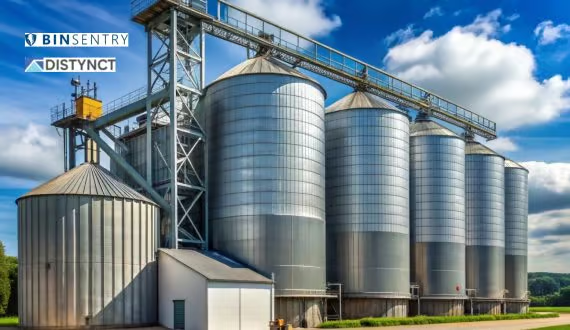
BinSentry, Distynct partner in real-time livestock monitoring
The partnership will allow customers to pair BinSentry’s feed monitoring technology with Distynct’s barn alarm and environmental monitoring systems.
-
Harbro expands UK feed business with Cargill Dalton acquisition
The integration is expected to be completed by early 2027.
-
Jordan tenders for 120,000 tonnes of feed barley
European traders said price offers for the tender are due on 12 August.
-
Tanzania unveils US$1.3B poultry plan to cut feed costs
Under the strategy, soybean production is targeted to increase from about 25,000 tonnes to 300,000 tonnes by 2036.
-
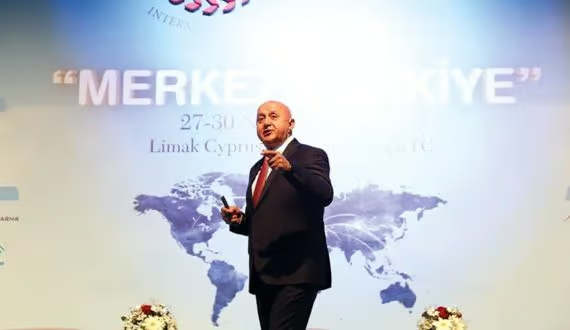
Turkish feed sector targets Africa through strategic partnership
The event will take place at the Cape Town International Convention Centre.
-
SAVC urges farmers to strengthen everyday biosecurity
The warning comes as South Africa continues to strengthen its response to foot-and-mouth disease (FMD).
-
Namibia turns crop residues into livestock feed as Africa explores local feed resources
Established in 1977, Musese is one of Namibia’s oldest green schemes.
-
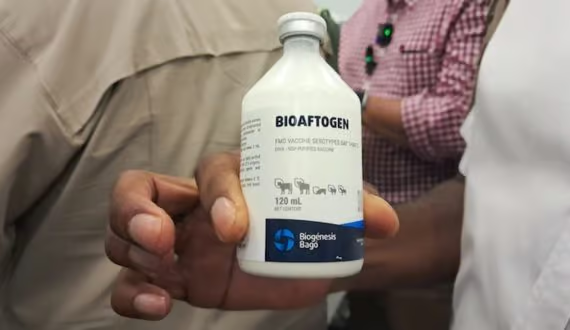
South African producers gain access to 4.5M FMD vaccine doses
RMIS opens ordering platform for veterinarians to order the vaccine.