H5N1
-
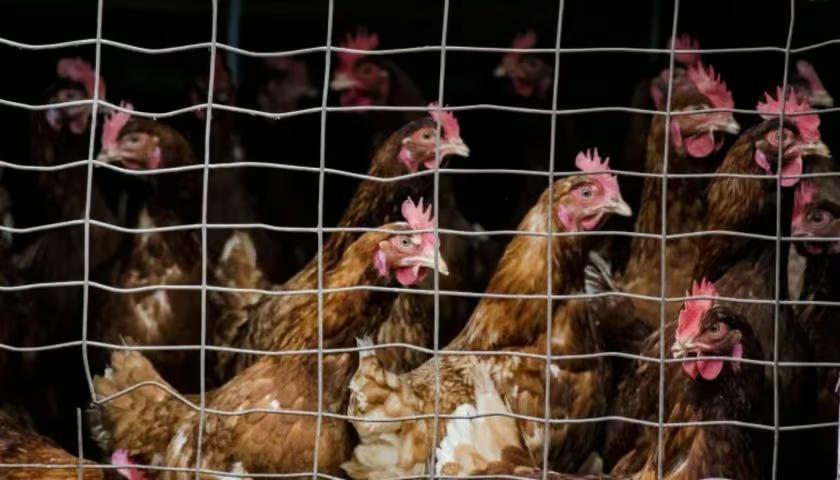
New H5N1 outbreaks reinforce feed biosecurity as Philippines and Australia report fresh detections
The H5N1 virus was detected in a flock of 39 poultry in the town of Capalan, WOAH said.
-

2.16M poultry lost from avian influenza in May 2026, WOAH reports
H5N1 remained the dominant strain as new outbreaks were reported across seven countries.
-
Australia confirms first H5N1 detection, completing global spread of avian influenza
H5N1 bird flu has now found its way to every continent.
-
H5N1 resurges across West Africa as poultry industry faces renewed disease threat
Since the beginning of 2026, several West African countries have reported new outbreaks of highly pathogenic avian influenza (H5N1).
-
Nigeria launches US$350,000 bird flu response programme to protect poultry sector
The programme aims to reduce the risk of outbreaks and strengthen poultry health systems.
-
South Africa adopts avian influenza vaccination strategy after US$529M poultry crisis
Initial findings from pilot programmes suggest that vaccination does not completely prevent infection but can significantly reduce mortality rates.
-
Côte d’Ivoire confirms H5N1 avian influenza outbreak for the first time in 5 years
The 2021 outbreak forced the culling of 600,000+ birds, costing over US$5.37 million.
-
Namibia reports first H5N1 case since 2022 amid Nigeria, South Africa outbreaks
According to WOAH, H5N1 is affecting poultry and wild birds across multiple African countries, with Mozambique reporting a novel low‑pathogenic variant.
-
Avian influenza detected for the first time in Europe
This discovery followed the confirmation of avian influenza in a cat on the same farm.
-
H5N1 bird flu found to persist in raw milk and cheese, raising new food safety concerns
Researchers are now working to determine the minimum level of acidification required to reliably inactivate H5N1.