Dairy
-
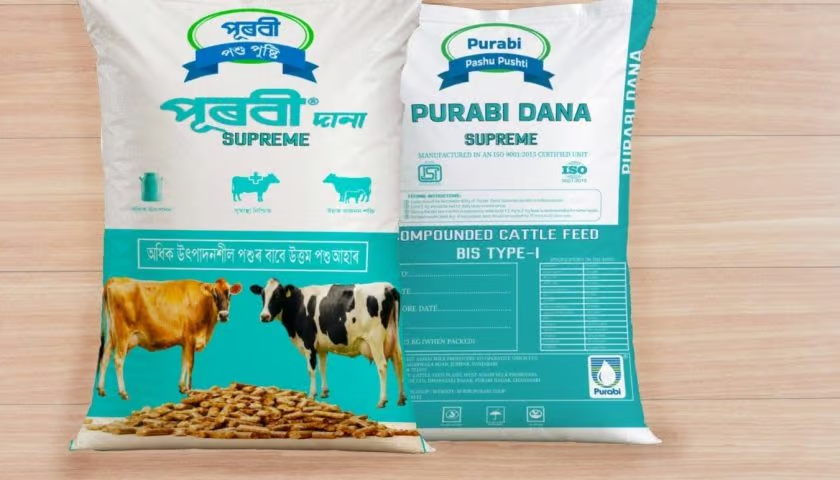
Purabi Dairy launches premium cattle feed
WAMUL has supplied approximately 23,000 metric tonnes of cattle feed and 175 metric tonnes of mineral mixture since resuming operations.
-

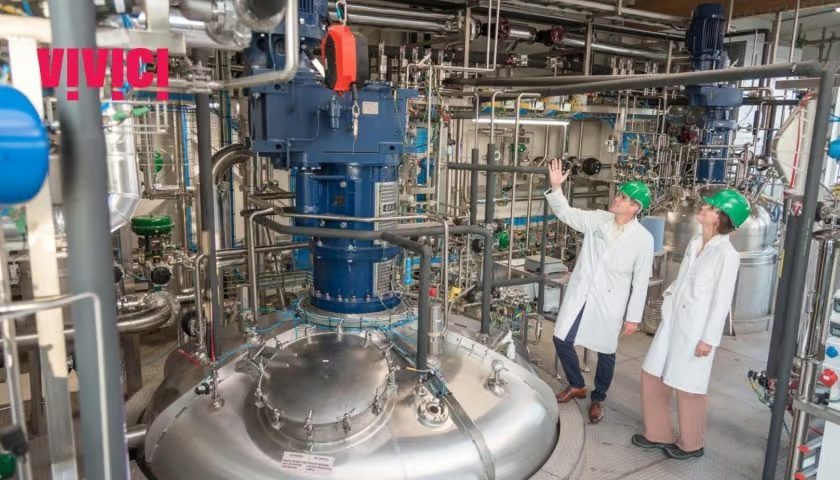
Vivici secures US$14.4M EIC funding to scale precision-fermented dairy proteins
The company will usethe funding to increase production capacity and accelerate the commercialization of its precision-fermented dairy proteins.
-
Al Dahra signs MoU with Al Rawabi Dairy to strengthen dairy animal feed supply
This partnership reflects on shared ambition to strengthen food supply and drive greater efficiency across the dairy value chain.
-
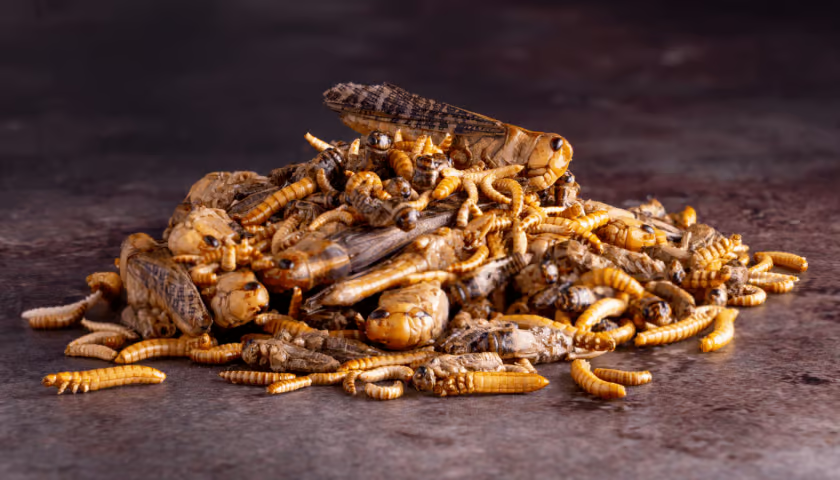
Top 10 alternative protein sources transforming animal feed in Africa and the Middle East
These innovations has the greatest potential to reshape the future of feed
-
Ghana signs 10-year livestock modernisation partnership with Nebraska
Together, Ghana and Nebraska can demonstrate how international cooperation strengthens food security.
-
Elanco expands dairy nutrition and health portfolio with AHV acquisition
The acquisition reflects broader industry movement toward integrated dairy production systems that combine feed, nutrition and animal health tools to improve long-term herd performance.
-
IFEEDER completes livestock nutrient risk assessment with new beef and dairy reports
The beef and dairy cattle reports provide tailored insights into how vitamin and amino acid supplementation can impact performance, production and overall herd health
-
Technical meeting successfully held ahead of Indo Livestock 2026 Expo & Forum
The meeting is part of the official preparation series ahead of the exhibition, which will be held on 16–18 June 2026 at Nusantara International Convention Exhibition (NICE), PIK 2, Tangerang, Indonesia.
-
Webinar: How genomic selection is changing the fight against heat stress in dairy
Heat stress costs the global dairy sector an estimated $10 billion annually
-
Phibro launches sustainability platform targeting feed and pet food emissions
USA – Phibro Animal Health Corporation has launched a new Sustainable Solutions Platform (SSP) to help animal protein, dairy, and pet food producers reduce greenhouse…