Nigeria
-

Nigeria plans US$100M veterinary vaccine plant to strengthen livestock disease control
The facility is expected to produce up to 1.2 billion vaccine doses annually, initially serving the domestic market.
-

Asanita secures US$675K to advance feedstock development for US$22M bioethanol plant
Securing funding for strategic project components such as feedstock development is a significant step in building a resilient and sustainable ethanol value chain in Nigeria.
-
Olam Agri, IDH expand partnership to strengthen sustainable feed value chains in Africa
Beyond Nigeria and Ghana, Olam Agri and IDH intend to identify new food and feed projects across other African markets.
-
Foluke Areola becomes first African to lead World Aquaculture Society
Foluke Omotayo Areola is a highly accomplished Fisheries and Aquaculture expert with over 40 years of diverse experience.
-
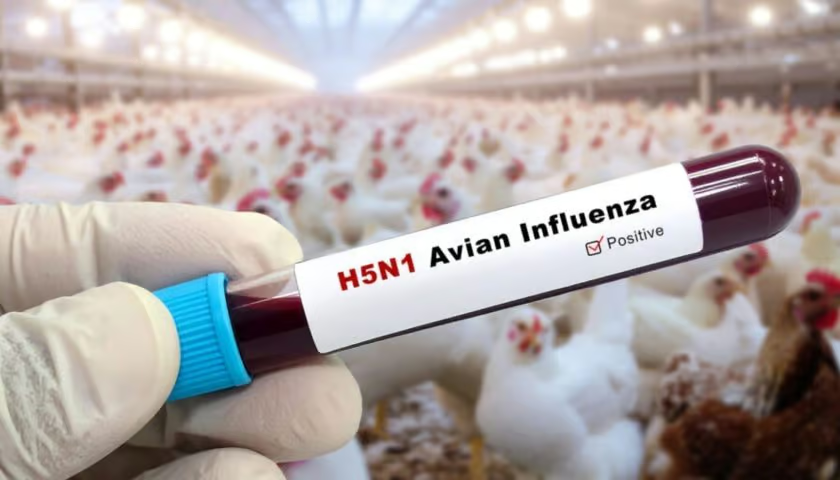
Nigeria launches US$350,000 bird flu response programme to protect poultry sector
The programme aims to reduce the risk of outbreaks and strengthen poultry health systems.
-
World Bank to build US$187,000 national animal feed reference laboratory at MOUAU
The laboratory is expected to strengthen Nigeria’s feed testing and regulatory capacity, at a time when the country’s livestock sector is under growing pressure.
-
WAF launches Kenya, Nigeria councils to drive feed and agribusiness growth
The dual launch reflects a broader shift toward coordinated, innovation-led agricultural development in Africa.
-
Nigeria targets US$3B pastoral livestock investment as feed costs expose sector gaps
The sector supports around 75 million livelihoods and contributes roughly 5% to GDP, valued at about US$32 billion.
-
Nigeria strengthens fight against CBPP control as outbreaks threaten cattle production
CBPP mortality rates can reach up to 50% in affected herds.
-
Nigeria, Nestlé Nigeria Plc signs MOU to boost livestock genetics and dairy feed systems
The initiative aligns with President Bola Tinubu’s livestock transformation agenda, which seeks to modernise production systems and reduce conflict linked to traditional grazing.