Livestock
-

Namibia turns crop residues into livestock feed as Africa explores local feed resources
Established in 1977, Musese is one of Namibia’s oldest green schemes.
-

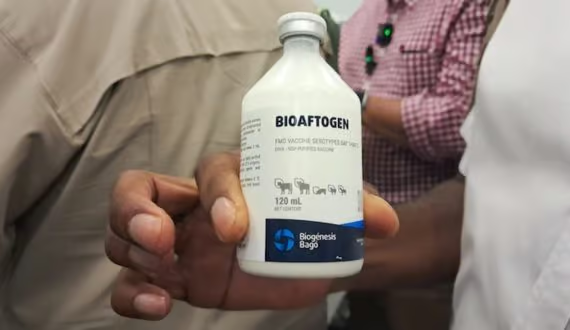
South African producers gain access to 4.5M FMD vaccine doses
RMIS opens ordering platform for veterinarians to order the vaccine.
-
Kenya Veterinary Association urges pre-positioning of feed, vaccines as El Niño threatens livestock sector
KVA is calling for emergency pre-emptive livestock vaccination campaigns.
-
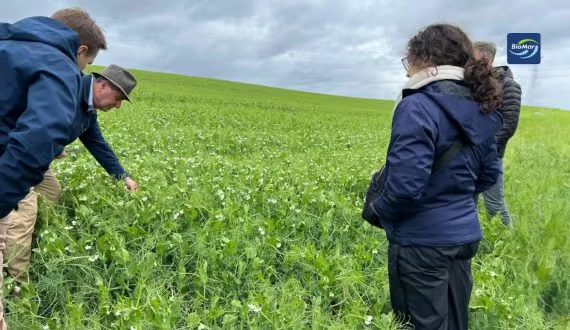
BioMar, Multi X launch regenerative feed crops pilot across 20,000 hectares in Chile
The joint project aims to evaluate if the model should be extended across more than 18,000 hectares of farmland in southern Chile.
-
US$750M Texas screwworm facility to open seven months ahead of schedule
Additionally, USDA officials launch AI-equipped drones to detect screwworm in South Texas livestock
-
Nigeria expands feed production as government doubles livestock contribution
The livestock development strategy focuses on health, commercial feeds, genetics, sustainability, value chains, peacebuilding, and market expansion.
-
Lallemand acquires BIO-CAT to expand enzyme and microbial solutions portfolio
The acquisition combines 2 family-owned fermentation and enzyme technology companies, adding manufacturing capacity.
-
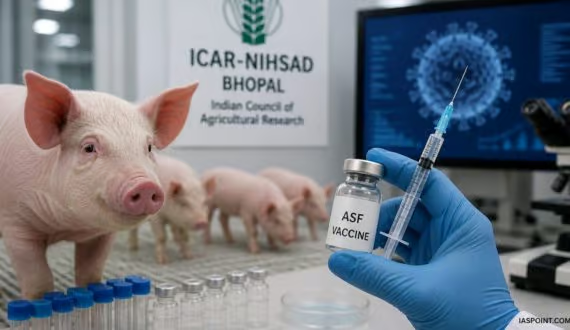
Indigenous African Swine Fever Vaccine Developed by ICAR
African Swine Fever is one of the most destructive viral diseases affecting domestic and wild pigs.
-
FEFAC, Sindirações Sign EU-Brazil Feed MoU
The agreement is also expected to support implementation of the EU-Mercosur Partnership Agreement, which entered provisional application on May 1, 2026.
-
Fruit processing waste finds new value in broiler feed
Valorisation of fruit byproducts is opening greener pathways for poultry and livestock nutrition, helping reduce waste streams while supporting circular farming systems.