Livestock
-

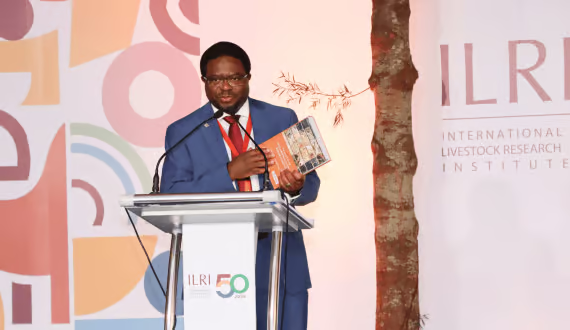
Heifer to push farmer-centred financing reforms at FINAS 2026 summit
The event will explore investment opportunities across Africa’s agrifood sector, including financing for sustainable feed and fodder production to strengthen livestock productivity.
-

ILRI wins US$1.45M grant to strengthen AI-driven disease surveillance in Africa
The funding will advance AI-driven data analyses for genomics surveillance in low and middle-income countries
-
Livestock needs more climate funding ahead of expected super El Niño, ILRI says
Experts are warning governments to increase climate finance for livestock ahead of an expected super El Niño.
-
US reopens Mexico livestock imports as New World screwworm risks ease
The move marks a significant step in restoring cross-border livestock trade while maintaining strict biosecurity measures.
-
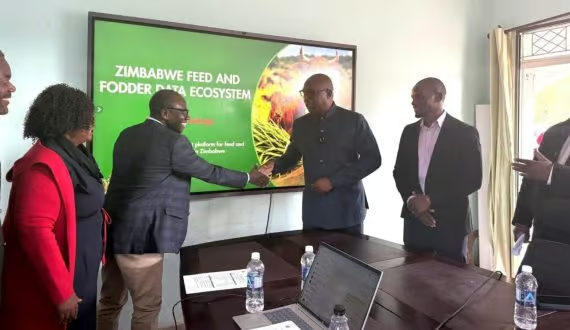
Zimbabwe launches digital feed dashboard to strengthen livestock resilience against drought
The innovation aims to improve access to information on animal feed resources and strengthen preparedness against future climate shocks.
-
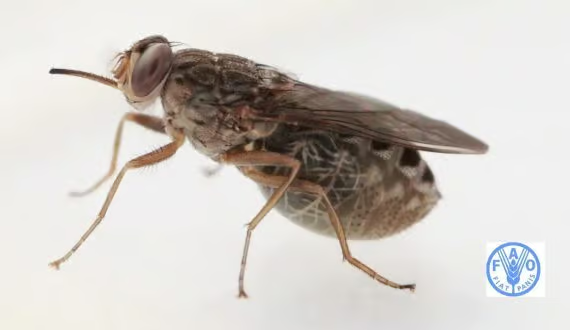
Senegal’s tsetse eradication programme transforms livestock production
The programme has reduced tsetse fly populations in the Niayes region by more than 99%, effectively eliminating trypanosomosis from most areas.
-
Russia expands veterinary partnerships across Africa
Beyond high-profile sectors like energy and defence, Russia is developing a more discreet agricultural presence in Africa.
-
Animistic, Blackhive to accelerate animal nutrition innovation
The partnership combines Animistic’s evidence-based approach to animal health and nutrition with Blackhive’s global supply chain capabilities
-
Neogen expands insect control recommendations as NWS concerns grow
“The United States has defeated this pest before, and we will do it again,” said the USDA.
-
UN agencies push to contain resurgent New World Screwworm across the Americas
The US$1 million five-year research initiative aims to control the return of the New World Screwworm across America.