Livestock
-
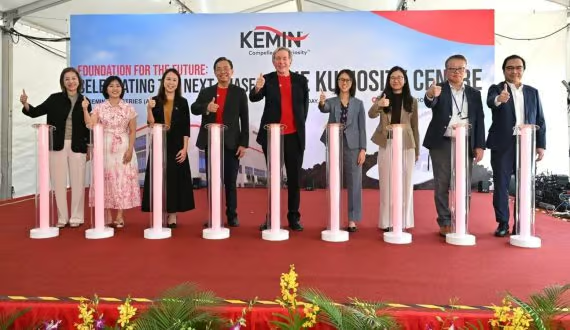
Kemin invests US$35M in Singapore innovation hub to strengthen feed solutions in Asia-Pacific
The new facility will bring together the company’s regional business functions and strengthen its pipeline of animal nutrition solutions across the region.
-

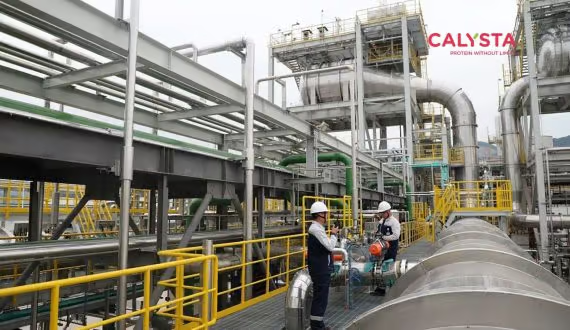
Calysta appoints new CEO as FeedKind producer seeks funding to scale single-cell protein production
The current decisions show the commitment moving from a technology provider to become an actual market player in protein supply for fish feed, animal feed and petfood.
-
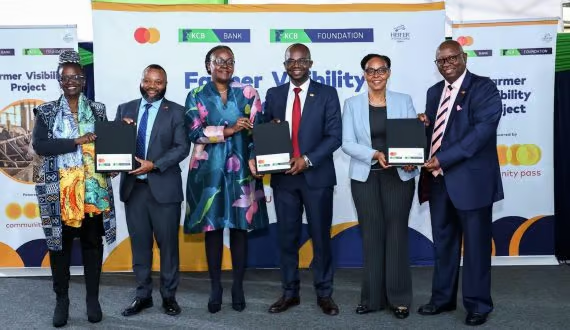
Heifer, Mastercard & KCB launch digital payments initiative for dairy farmers
The project aims to reach 30,000 smallholder dairy farmers over a nine-month pilot period.
-
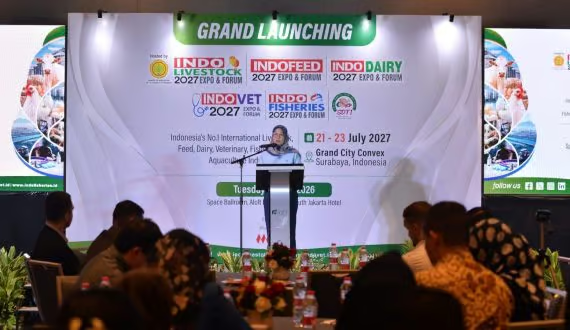
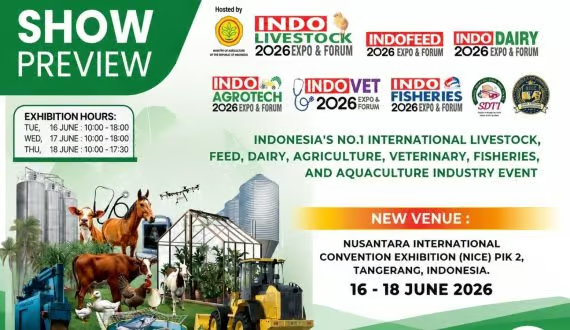
Indo Livestock 2027 launched following record-breaking 2026 edition
Napindo also announced that the 2028 edition will return to NICE PIK 2 in Jakarta from July 25–27, 2028.
-
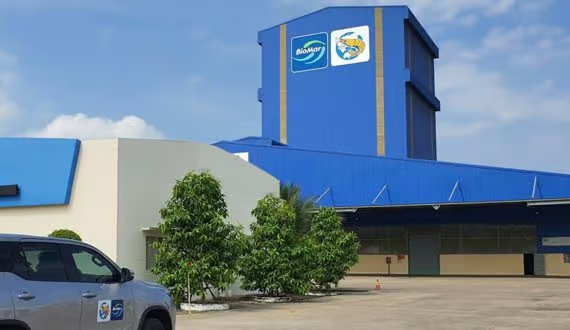
BioMar expands ASC-certified feed production network into Asia
The certification marks another important milestone in the continued expansion of BioMar’s global network of ASC-certified feed production facilities.
-
Indo Livestock 2026 showcases feed innovation and investment in Indonesia
Major international companies, including Andritz Feed & Biofuel, Cargill, Charoen Pokphand Indonesia, Famsun, EW Nutrition, Elanco, Evonik, Olmix, ADM Protexin and Angel Yeast, showcased innovations.
-
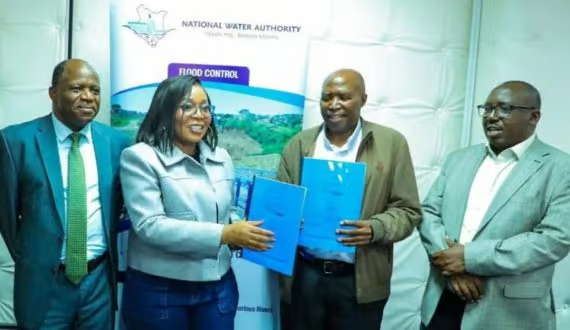
Kenya to develop large-scale lucerne project with feed mill in Tana River
Lucerne farming involves cultivating a perennial legume widely known as alfalfa.
-
ADM invests in Oklahoma feed logistics hub to strengthen livestock supply chain
The project is expected to be completed by mid-year 2027.
-
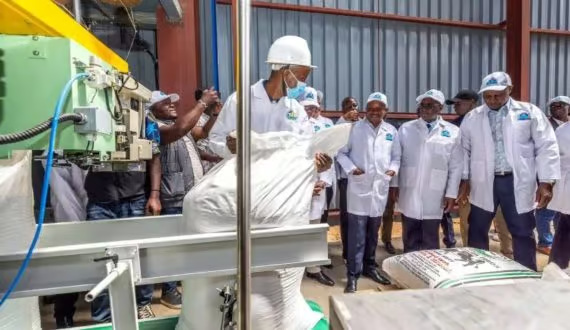
Meru Dairy Cooperative launches feed mill to lower costs for dairy farmers
The animal feed mill will help dairy farmers in Meru County and nearby counties reduce the cost of production.
-
dsm-firmenich survey finds 85% of global feed samples contaminated with multiple mycotoxins
East Asia recorded the highest overall risk level at 97%, followed by Southern Asia at 92%.