

Neogen expands insect control recommendations as NWS concerns grow
“The United States has defeated this pest before, and we will do it again,” said the USDA.
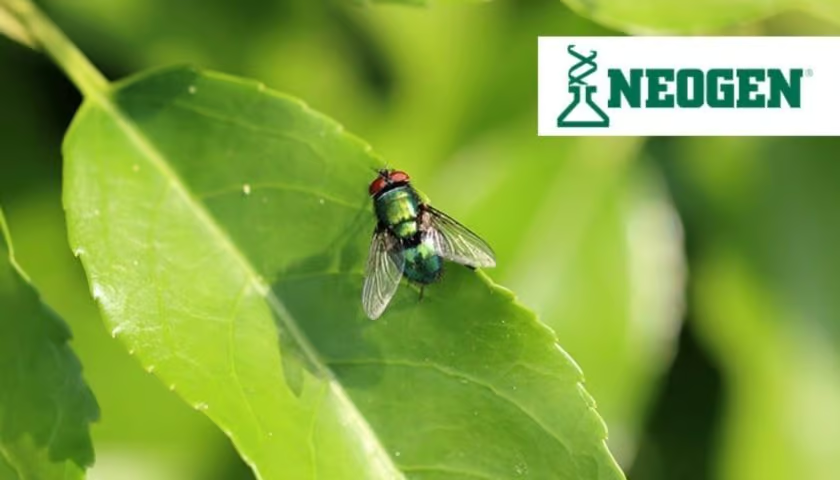
USA – Neogen Corporation has expanded access to special-use recommendations for two livestock insect-control products as renewed concerns over New World Screwworm (NWS) drive increased focus on prevention, surveillance, and fly management across the United States’ livestock sector.
The animal health and food safety company announced expanded availability of FIFRA Section 2(ee) recommendations for its Prozap® Insectrin X Concentrate and Prozap® Screw Worm and Ear Tick Aerosol products.
The recommendations have been approved by the Texas Department of Agriculture and are also being made available in Florida.
The move provides livestock producers, ranchers and horse owners in both states with additional options to strengthen fly control programmes amid heightened vigilance surrounding NWS.
New World Screwworm was largely eradicated from the United States decades ago through extensive control programmes.
However, recent detections in parts of Central America and Mexico have prompted increased monitoring efforts and industry preparedness measures.
Neogen said effective fly control and prompt wound management remain critical components of livestock health programmes.
The company noted that Prozap® Screw Worm and Ear Tick Aerosol can help protect wounds from flies and maggots while controlling a range of pests, including ticks, lice and gnats.
Prozap® Insectrin X Concentrate can be used as part of broader insect management programmes to reduce fly populations around livestock facilities.
Focus on prevention and surveillance
The announcement comes as US animal health authorities continue to urge producers to remain alert for signs of NWS and other insect-related threats.
The US Department of Agriculture has repeatedly emphasised the importance of surveillance, monitoring and rapid reporting as part of ongoing prevention efforts.
While NWS has attracted significant attention in recent months, producers continue to face routine insect challenges that can affect livestock health and productivity.
These include horn flies, stable flies, face flies, ticks and lice.
According to Neogen, integrated pest management remains one of the most effective approaches for reducing the impact of these pests.
“Producers face insect pressure every season, making prevention and routine monitoring essential parts of herd management,” said Kirk Ramsey, Professional Services Veterinarian at Neogen.
“Integrated fly control programs, prompt wound management, and regular observation of animals can help producers address ongoing insect challenges while remaining prepared for emerging concerns.”
Industry response to growing biosecurity risks
The expanded recommendations reflect growing efforts across the livestock industry to strengthen biosecurity and preparedness against transboundary animal health threats.
Neogen said producers should work closely with veterinarians and animal health advisers to develop insect control programmes tailored to local conditions and operational needs.
The company added that effective pest management not only supports animal welfare but also helps protect productivity and profitability by reducing the impact of insect-borne stress and disease challenges.
Neogen operates in more than 140 countries and provides a range of food safety, livestock, and animal health solutions to support global food security and animal well-being.
Sign up HERE to receive our email newsletters with the latest news updates and insights from Africa and the World, and follow us on our WhatsApp channel for updates.
Be the first to leave a comment