

Nigeria launches US$350,000 bird flu response programme to protect poultry sector
The programme aims to reduce the risk of outbreaks and strengthen poultry health systems.
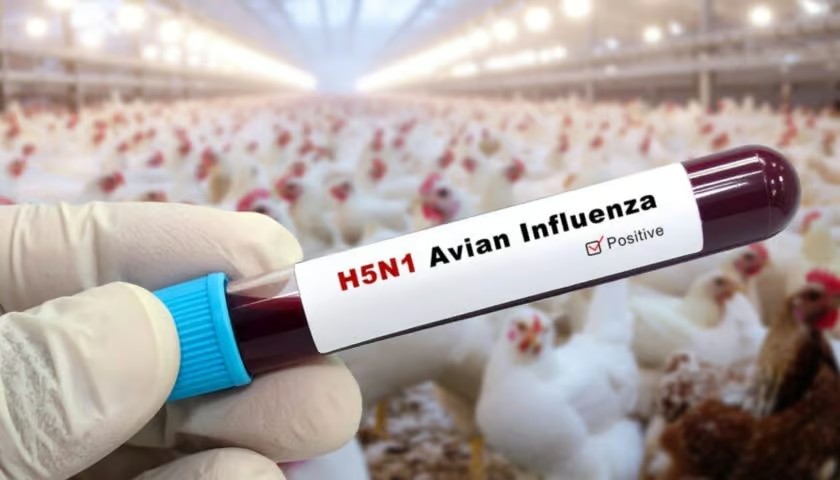
NIGERIA – Nigeria has stepped up efforts to contain the spread of Highly Pathogenic Avian Influenza (HPAI), commonly known as bird flu, by launching a new emergency intervention programme supported by the Food and Agriculture Organisation of the United Nations (FAO).
The initiative comes as the country continues to face recurring outbreaks of the disease, which have disrupted poultry production, affected farmer incomes and raised concerns about food security in one of Africa’s largest poultry-producing nations.
Under the programme, the Federal Government of Nigeria and FAO have committed a combined US$350,000 to strengthen the country’s capacity to detect, monitor and respond to bird flu outbreaks.
The funding will be used to improve disease surveillance systems, expand diagnostic capabilities, strengthen emergency response measures and support coordination among institutions involved in animal health management.
Authorities said the intervention will focus particularly on states that have experienced recent outbreaks, with resources directed towards reducing the spread of infection and limiting losses within the poultry industry.
Nigeria’s poultry sector plays a significant role in the national economy, supplying eggs and poultry meat to millions of consumers while supporting employment across farming, feed production, transportation, processing and trading activities.
However, repeated bird flu outbreaks have continued to place pressure on the industry, often forcing producers to cull infected flocks and absorb substantial financial losses.
Officials involved in the programme said a key priority will be improving early warning systems and rapid response mechanisms to allow veterinary services to identify and contain outbreaks more quickly.
The project will also support veterinary professionals by providing access to enhanced surveillance tools, diagnostic equipment, and laboratory resources to improve disease monitoring and reporting.
In addition, the programme will promote stronger biosecurity practices throughout the poultry value chain, encouraging farmers to adopt stricter measures to reduce the risk of disease transmission.
Recommended practices include limiting access to poultry houses, improving sanitation procedures, ensuring proper disposal of dead birds and maintaining closer monitoring of flock health.
The initiative will further strengthen cooperation among institutions responsible for livestock health, including the National Veterinary Research Institute, state veterinary authorities and other agencies involved in disease prevention and control.
According to project stakeholders, the programme will follow a One Health framework that integrates animal, environmental, and public health considerations to manage disease threats.
Industry representatives have welcomed the intervention, describing disease prevention as essential for maintaining stable poultry supplies and supporting rural livelihoods.
With Nigeria’s poultry population numbering in the hundreds of millions, authorities view stronger disease management systems as critical to improving the sector’s long-term resilience and reducing the impact of future outbreaks.
As implementation begins, attention will centre on the programme’s ability to enhance preparedness, improve outbreak response and support sustainable growth across Nigeria’s poultry industry.
Sign up HERE to receive our email newsletters with the latest news updates and insights from Africa and the World, and follow us on our WhatsApp channel for updates.

Be the first to leave a comment