

New H5N1 outbreaks reinforce feed biosecurity as Philippines and Australia report fresh detections
The H5N1 virus was detected in a flock of 39 poultry in the town of Capalan, WOAH said.
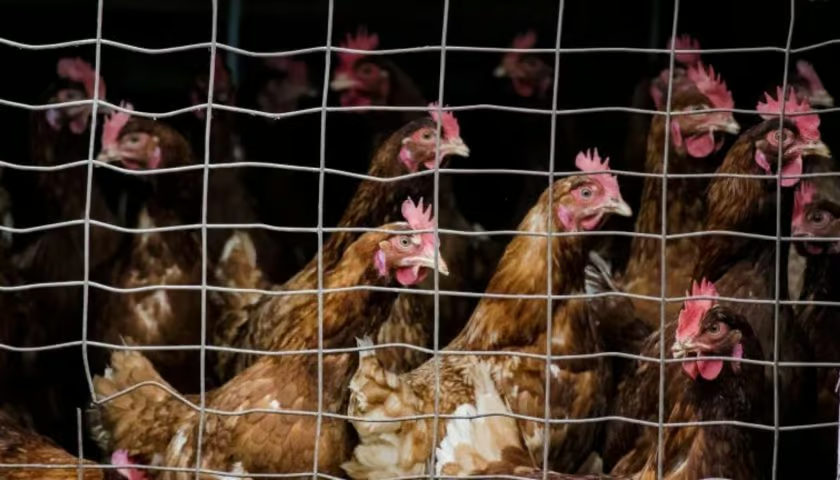
WORLD – Fresh detections of highly pathogenic H5N1 avian influenza in the Philippines and Australia have renewed concerns over poultry feed biosecurity, with animal health experts warning that feed mills, ingredient suppliers and poultry producers must remain vigilant against potential disease transmission pathways.
The Philippines has confirmed a new H5N1 outbreak in a backyard poultry flock in Oriental Mindoro, while Australia has recorded its first locally infected mainland seabird, highlighting the continued spread of the virus across the Asia-Pacific region.
According to the World Organisation for Animal Health (WOAH), Philippine authorities detected the virus in a backyard flock of 39 birds in the town of Capalan after laboratory testing confirmed the presence of the highly pathogenic H5N1 strain.
Veterinary authorities culled the entire flock to contain the outbreak and prevent further transmission.
Although the latest case occurred in backyard poultry, the detection underscores the importance of strict biosecurity throughout the poultry value chain, including feed manufacturing, transport and on-farm feed management.
Feed producers are increasingly encouraged to implement stringent protocols for ingredient sourcing, storage, and vehicle sanitation to minimise contamination risks.
Industry guidelines also recommend preventing contact between feed ingredients and wild birds, maintaining secure storage facilities and disinfecting feed delivery vehicles and equipment entering poultry farms.
The latest outbreak comes as the poultry industry worldwide continues to recover from years of avian influenza that have reduced flock sizes, disrupted feed demand, and increased production costs.
Feed biosecurity remains critical as surveillance expands
Meanwhile, Australia has confirmed its first case of H5N1 in a locally found mainland seabird, after laboratory analysis identified the virus in a greater crested tern discovered in Robe, South Australia.
The detection, confirmed by Australia’s national science agency, raises the country’s total H5N1 cases to 12, following two additional detections in South Australia and one in Western Australia.
Agriculture Minister Julie Collins said authorities are investigating how the bird became infected while expanding surveillance to monitor the spread of the virus.
Australian officials stressed there is currently no evidence that H5N1 has spread into the country’s commercial poultry sector, feed supply chain or other livestock industries.
For feed manufacturers, however, the continued movement of the virus through wild bird populations reinforces the need for preventive biosecurity measures.
Industry experts note that while properly manufactured feed has not been identified as a major transmission route for H5N1, contamination of raw materials, feed storage areas or farm environments by infected wild birds remains a recognised risk that requires ongoing monitoring.
The latest detections also highlight the importance of coordinated surveillance between animal health authorities, poultry producers and feed manufacturers to protect poultry production and maintain confidence in regional feed supply chains.
As H5N1 continues to circulate globally, maintaining robust feed hygiene, farm biosecurity, and disease monitoring programmes will remain essential to limiting economic losses and safeguarding poultry production across the Asia-Pacific region.
Sign up HERE to receive our email newsletters with the latest news updates and insights from Africa and the World, and follow us on our WhatsApp channel for updates.

Be the first to leave a comment