

Australia confirms first H5N1 detection, completing global spread of avian influenza
H5N1 bird flu has now found its way to every continent.
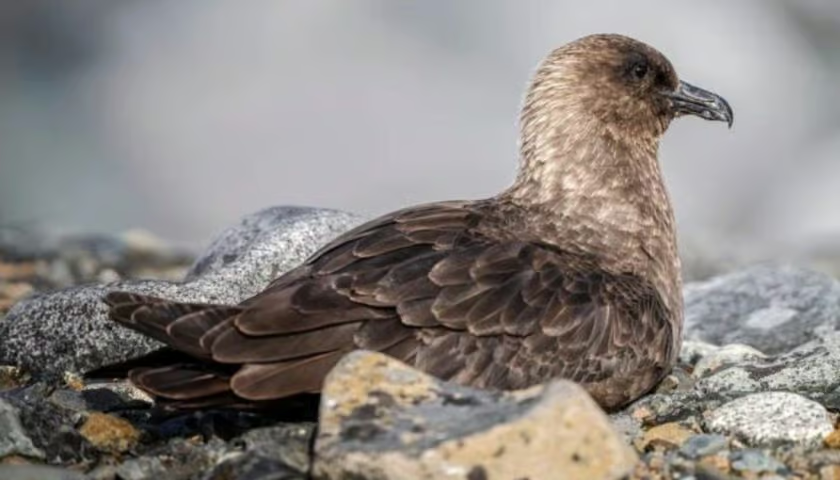
AUSTRALIA – Australia has confirmed its first detection of the highly pathogenic H5N1 avian influenza strain in wild birds, making it the last continent to record the virus and marking a significant development in the global spread of one of the most devastating animal diseases affecting poultry and wildlife.
The Australian Department of Agriculture confirmed the virus was detected in a migratory brown skua found at Cape Le Grand National Park near Esperance in Western Australia.
Authorities are also investigating a second suspected case involving a southern petrel found on a nearby beach.
The confirmation ends Australia’s status as the only continent free from the H5N1 strain, which has caused widespread outbreaks in poultry and wild bird populations across Europe, Asia, Africa, North and South America, and Antarctica.
Australian Agriculture Minister Julie Collins said authorities had anticipated the virus’s eventual arrival due to migratory birds’ movements.
“We all knew we couldn’t be bird flu-free forever,” Collins said during a media briefing following the announcement.
Despite the detection, officials said there is currently no evidence of mass bird deaths or widespread transmission among wildlife populations.
Fiona Fraser, Australia’s Threatened Species Commissioner, said surveillance efforts are underway and authorities expect to determine within days whether additional wildlife populations have been affected.
The country’s Chief Veterinary Officer, Beth Cookson, noted that Australia had spent years preparing for the potential arrival of H5N1 and that emergency animal disease response mechanisms were immediately activated following the detection.
The virus had previously been detected in October 2025 in Australia’s remote Heard and McDonald Islands in the southern Indian Ocean.
However, the latest case represents the first confirmed detection on the Australian mainland.
The development comes amid growing concerns about the impact of H5N1 on wildlife populations globally.
A recent scientific study estimated that the virus killed approximately 13,000 seal pups from a colony of around 17,000 animals on Heard Island since August 2025, representing more than 75% of the population.
Researchers also reported elevated mortality rates among local penguin populations.
Scientists believe the virus likely reached the islands through migratory birds travelling from the French-administered Crozet Islands, located about 1,800 kilometres away.
Since emerging in China in the late 1990s, H5N1 has become the dominant strain of avian influenza circulating globally.
The virus spreads rapidly among wild and domestic birds and has increasingly been detected in mammals, including seals, foxes, sea lions and otters.
While human infections remain rare, health authorities continue to closely monitor the virus due to concerns about its potential to evolve and adapt to new hosts.
The detection is expected to intensify Australia’s surveillance and biosecurity measures, particularly across its poultry industry and wildlife conservation sectors, as authorities work to contain the virus and limit its impact on animal populations.
Sign up HERE to receive our email newsletters with the latest news updates and insights from Africa and the World, and follow us on our WhatsApp channel for updates.


Be the first to leave a comment