

Uganda research investigates pig feed as potential ASF pathway
To combat African Swine Fever, ILRI and the National Agricultural Research Organisation (NARO) are collaborating on new research to evaluate the likelihood of ASFV spreading via pig feeds.
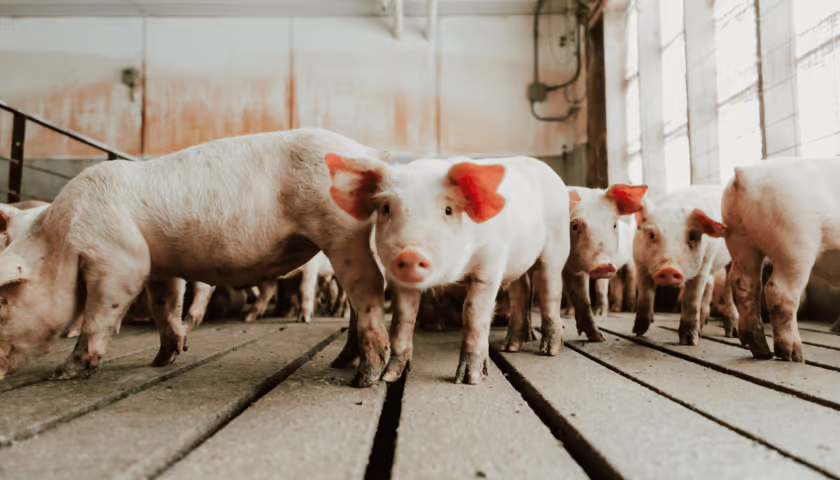
UGANDA – Researchers from the International Livestock Research Institute (ILRI) and Uganda’s National Agricultural Research Organisation (NARO) are investigating whether pig feed could provide a pathway for African Swine Fever (ASF) virus transmission, following recent outbreaks in two Ugandan districts.
The research team travelled to Mukono and Kitagwenda districts to examine how pig feed moves through local supply chains and identify points where contamination with ASF virus (ASFV) could potentially occur.
Researchers engaged with pig farmers, traders, butchers, feed stockists, veterinarians and local leaders to map the feed value chain and understand practices that could influence disease transmission.
The study identified two distinct feed systems.

The informal rural system relies largely on locally available and on-farm feed resources, while a more formal peri-urban system is supplied by commercial feed manufacturers.
Researchers said both systems contain potential risk points, including ingredient sourcing, feed processing, transportation, and storage.
The research also highlighted the importance of incorporating local knowledge when assessing disease risks.
Traditional feeding practices and indigenous knowledge can provide insight into how feed is sourced, handled and distributed at farm level.

Samples collected from pigs and feed will now undergo laboratory analysis at the National Livestock Resources Research Institute (NaLIRRI) diagnostic laboratories in Kampala.
The testing is expected to provide further evidence on whether and to what extent feed could contribute to ASFV transmission.
Feed safety becomes part of ASF control discussion
ASF remains one of the most serious diseases affecting pig production in Africa.
The highly contagious viral disease can cause high mortality in domestic pigs and has no widely available commercial vaccine for routine field control.
For smallholder producers, outbreaks can result in animal losses and significant economic damage, while restrictions on pig movements and trade can create additional impacts across the value chain.
The Uganda research adds to the wider discussion around ASF biosecurity, which commonly focuses on animal movements, contact between infected and healthy pigs, contaminated equipment and people, and pork products.
Understanding potential feed-related pathways could help identify additional points where biosecurity measures can be introduced, particularly in informal supply chains where farmers may rely on locally sourced ingredients.
The findings from the laboratory analysis will be important in determining whether suspected feed contamination represents a meaningful ASF transmission risk and what interventions could be developed to reduce that risk.
For Uganda’s pig sector, researchers said better understanding of how ASF moves through production systems could ultimately support more targeted disease-control measures, protect farmer livelihoods and strengthen food security.
Sign up HERE to receive our email newsletters with the latest news updates and insights from Africa and the World, and follow us on our WhatsApp channel for updates.
Be the first to leave a comment