

PFI challenges scientific context of cat food contaminant study
The PFI statement follows the Clean Label Project’s publication of findings on contaminant levels in cat food.
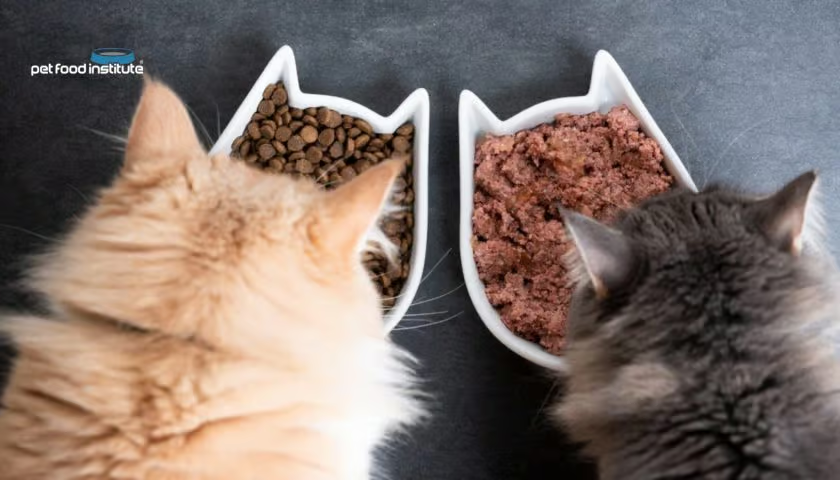
USA – The Pet Food Institute (PFI) has questioned the scientific and regulatory context of a Clean Label Project study that detected heavy metals and other contaminants in cat food, arguing that the findings do not establish whether the reported levels pose a health risk to cats.
In a statement issued on October 2, PFI CEO Elise Fennig said the study uses a proprietary “purity standard” rather than established regulatory benchmarks or science-based risk assessments.
The organisation said it was unclear whether the research had undergone scientific or veterinary review and how its methodology differed from existing industry and regulatory standards.
PFI represents US pet food manufacturers and said its members follow federal and state requirements, using ingredient specifications, supplier verification, testing, traceability and preventive controls to support product safety and nutritional quality.

Fennig said detecting a contaminant does not, by itself, indicate harm. Metals can occur naturally in the environment, including soil, air, and water, while potential health effects depend on factors such as exposure level and duration.
She cited guidance from the US Food and Drug Administration (FDA) on assessing metal exposure.
PFI also raised concerns about the study’s sampling approach, noting that each product was represented by a single batch.
It said this limits conclusions about contaminant levels across different production batches.

The Clean Label Project’s 2026 Cat Food Category Report, published on October 2, tested 100 products across 62 brands.
It reported lead in 99% of samples, cadmium in 96% and arsenic in 94%. The organisation said the findings showed differences in contaminant levels across product formats and protein sources.
Clean Label Project has clarified that its results compare contaminant levels within the category and do not determine whether an individual product is harmful to cats. The findings do not constitute an FDA safety alert or product recall.
The contrasting positions highlight the distinction between detecting contaminants in pet food and determining whether their concentrations and exposure levels present a health risk.
Assessing that risk requires considering the levels detected, exposure duration, and relevant scientific and regulatory benchmarks.
PFI said US pet food manufacturers remain committed to food safety, scientific innovation and producing nutritionally complete products.
The debate over the report centres on how to interpret the contaminant findings and what evidence is needed to assess their significance for feline health.
Sign up HERE to receive our email newsletters with the latest news updates and insights from Africa and the World, and follow us on our WhatsApp channel for updates.


Be the first to leave a comment