
Clean Label Project finds heavy metals in most cat food samples
The new study is prompting debate over how to interpret the results against established pet food safety standards.
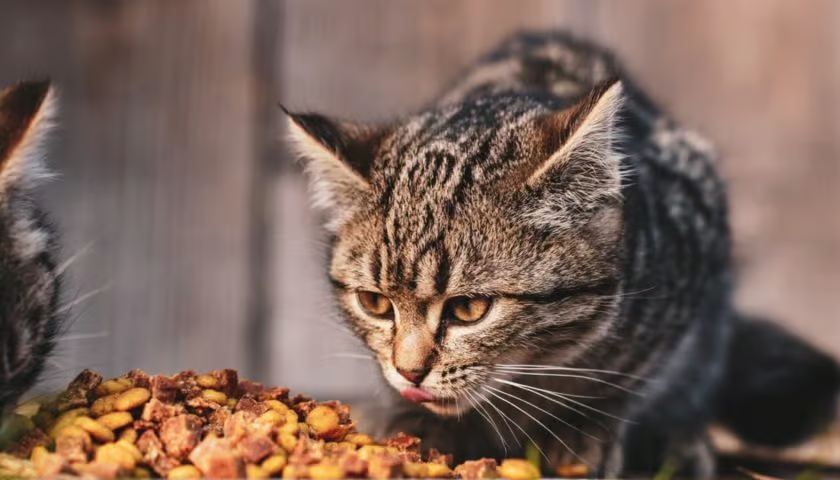
USA – A new Clean Label Project study found lead in 99% of 100 cat food products tested across 62 brands, with cadmium in 96% and arsenic in 94% of samples. The findings have sparked debate over how to interpret contaminant detection against established pet food safety standards.
Published on October 2, the 2026 Cat Food Category Report tested products across dry, wet, and air-dried or freeze-dried formats for more than 122 environmental and industrial contaminants, including heavy metals, pesticides, herbicides, phthalates and processing contaminants.
An independent laboratory accredited to ISO 17025 conducted testing using the described analytical methods.
Clean Label Project purchased 31 dry, 40 wet and 29 air-dried or freeze-dried products from retail outlets and assessed contaminant levels on a per-1,000-kilocalorie basis.

The report found differences in contaminant levels across product types and protein sources. Dry food contained roughly three times as much lead as wet or air-dried food on a calorie-adjusted basis.
Fish and seafood products showed the strongest association with mercury. After accounting for food format, these products contained about 18 times as much mercury as products using other protein sources. Cadmium levels were about 2.5 times higher in fish-based products.
Clean Label Project said it detected glyphosate in 37% of products, with levels increasing by about 40% for each additional plant ingredient among the first 10 ingredients. DEHP, a phthalate plasticiser, was detected in 48 of the 100 products.
The organisation stressed that its results compare contaminant levels within the category rather than determine whether an individual product is harmful to a cat.

Each product was represented by a single batch, meaning the results do not account for potential variation between production batches.
The report has drawn criticism from the Pet Food Institute (PFI), which represents US pet food manufacturers.
PFI said the study lacks important scientific and regulatory context and uses a proprietary “purity standard” rather than established regulatory benchmarks or risk-based assessments.
“The Clean Label Project study evaluates products against a proprietary ‘purity standard’ rather than established regulatory standards or science-based risk assessments,” said Elise Fennig, CEO of the Pet Food Institute.
Fennig said the presence of detectable metals does not by itself establish a health risk, noting that contaminants can occur naturally in soil, water and crops.
She added that pet food manufacturers use ingredient specifications, supplier verification, testing, traceability and preventive controls to support product safety.
Clean Label Project, meanwhile, said its findings highlight the importance of contaminant monitoring and ingredient sourcing, particularly for products containing marine ingredients.
The study is not an FDA safety alert or recall, and its findings do not establish that any tested product harms cats.
Instead, the report highlights differences in contaminant levels across the products examined and raises questions about how to assess these findings alongside regulatory and risk-based safety standards.
Sign up HERE to receive our email newsletters with the latest news updates and insights from Africa and the World, and follow us on our WhatsApp channel for updates.
Be the first to leave a comment