

South Africa steps up fight against foot and mouth disease
South Africa, which has zones free of FMD without vaccination, faces growing calls from producers to declare a “state of disaster” to mitigate the economic fallout.
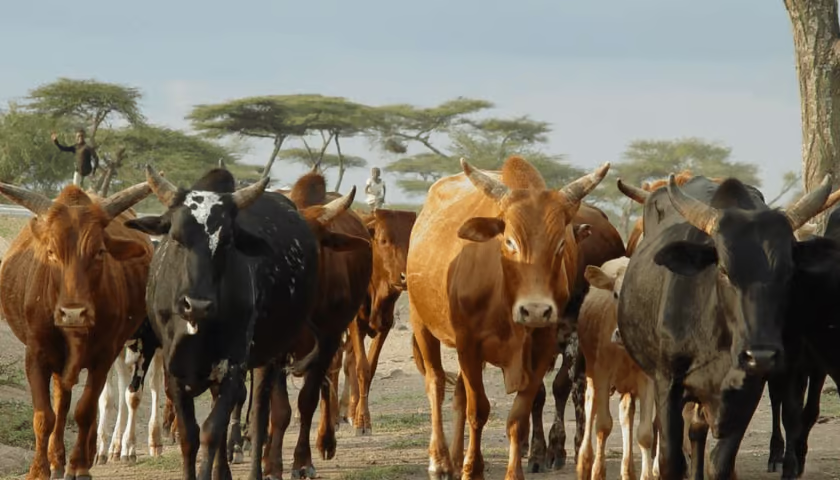
SOUTH AFRICA – The government of South Africa is ramping up its efforts to contain a fast-spreading outbreak of Foot-and-Mouth Disease (FMD), with the Department of Agriculture, the Agricultural Research Council (ARC), and other key partners hosting a high-level national Indaba from July 21–22 in Roodeplaat.
The meeting comes as the country battles multiple flare-ups of the highly contagious viral disease, which has struck livestock in at least five provinces: KwaZulu-Natal, Mpumalanga, Gauteng, Free State, and Limpopo.
The crisis has triggered increased biosecurity protocols, stricter movement restrictions, and a national push to boost vaccine availability.
“These plans are not only about responding to outbreaks, but also about building permanent infrastructure to manage future risks,” said the agriculture ministry.
The Indaba, hosted by Agriculture Minister John Steenhuisen and Deputy Minister Nokuzola Capa, will gather veterinary experts, academics, and livestock industry leaders to forge long-term strategies for FMD control.
Key agenda items include enhanced farm-level biosecurity, the rollout of vaccinations, and the enforcement of livestock movement regulations.
Industry at risk
The disease, which affects cloven-hoofed animals like cattle, sheep, and pigs, has already dealt a severe blow to South Africa’s multibillion-rand livestock sector. Karan Beef, the country’s largest feedlot, confirmed an outbreak at its Heidelberg facility last month.
The site slaughters around 2,000 cattle daily and is now under quarantine, a move that could disrupt beef supplies.
In response, the government has procured over 900,000 doses of FMD vaccine, with the first batch expected to arrive imminently. Each serotype of the virus requires a specific vaccine, making accurate surveillance and diagnosis critical to controlling its spread.
“The Indaba presents a vital opportunity to unite expertise and resources to eradicate this devastating disease effectively,” said the Department of Agriculture.
It emphasised the importance of cross-sector collaboration in devising sustainable solutions for FMD eradication.
Beyond the economic losses, the outbreak has strained South Africa’s trade relationships with countries such as China, Namibia, and Zimbabwe, imposing bans on its beef and related products.
The situation is further complicated by the livestock sector’s ongoing recovery from a major avian flu crisis, which resulted in the loss of a third of the national poultry flock in 2023.
Foot-and-mouth disease remains a transboundary threat to global animal health. According to the World Organisation for Animal Health, the disease disrupts not only local production but also international trade, requiring coordinated early warning systems and vaccination programs.
South Africa, which has zones free of FMD without vaccination, now faces growing calls from producers to declare a “state of disaster” to mitigate the economic fallout.
Sign up HERE to receive our email newsletters with the latest news updates and insights from Africa and the World, and follow us on our WhatsApp channel for updates.


Be the first to leave a comment