

Lagos state subsidy plan offers lifeline to poultry farmers
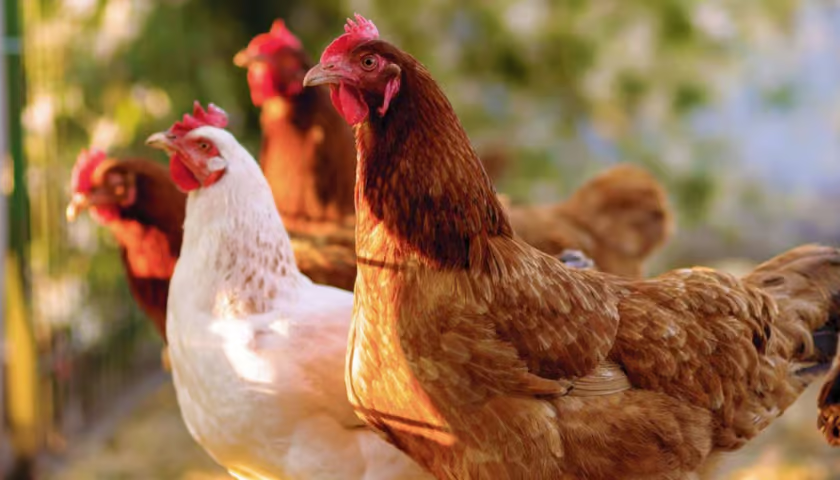
NIGERIA – The Poultry Association of Nigeria (PAN), Lagos State Chapter, has commended the Lagos State Government for its efforts to subsidise chicken feed expenses to alleviate the struggles of poultry farmers.
Mojeed Iyiola, chairman of the association, highlighted the significance of this initiative during an interview with the News Agency of Nigeria, stressing its potential to revitalise poultry production in the state.
Rising feed costs have taken a severe toll on the poultry sector, forcing many farmers to shut down their operations. Iyiola expressed deep appreciation for the government’s proactive measures, including targeted interventions to reduce production costs for poultry and fish farmers.
He emphasised the critical need for affordable poultry products for the public, stating, “As an association in 2025, all we are trying to do is to find a way of reducing the cost of production so that the end-product from the poultry industry will be within the reach of the masses.”
The planned subsidy program is centred on reducing feed materials’ costs, representing the most significant portion of production expenses in the poultry industry.
According to Iyiola, this intervention could significantly relieve the financial burden on farmers, helping them operate more efficiently and stay afloat amidst economic pressures.
However, the initiative currently aims to support only a limited number of financial members of the association.
“The state government wants to help farmers in the sector subsidise the cost of production, which is the most cost-intensive aspect of the poultry production subsector. However, the feed materials subsidisation will only cater to a few financial members of the association. We hope the intervention will cover more farmers,” Iyiola remarked.
The high cost of poultry feed has been a significant challenge for farmers, with the price of essential inputs skyrocketing. For instance, a 25kg bag of feed costs around N20,000 (US$12.8), a prohibitive expense for many farmers.
Iyiola noted that government subsidies could potentially bring this price down to N15,000 (US$9.6) or even N10,000 (US$6.4), significantly reducing production costs. This reduction would keep farmers in business and make poultry products more affordable for consumers.
Despite these challenges, Iyiola hopes the subsidy program will eventually expand to include more farmers.
He urged non-financial members of the association to register so they can benefit from future initiatives, emphasising the importance of collective participation in shaping a more resilient sector.
The Lagos State Government’s feed subsidy program comes at a critical juncture for poultry farmers grappling with mounting economic pressures.
If effectively implemented, this initiative could set a precedent for other states, driving broader support for the poultry industry across Nigeria.
Sign up HERE to receive our email newsletters with the latest news updates and insights from Africa and the World and follow us on our WhatsApp channel for updates.


Be the first to leave a comment