

Seychelles, India advance fisheries and aquaculture cooperation
The discussion focused on aquaculture, hatcheries, tuna fisheries, stock assessment and post-harvest technology.
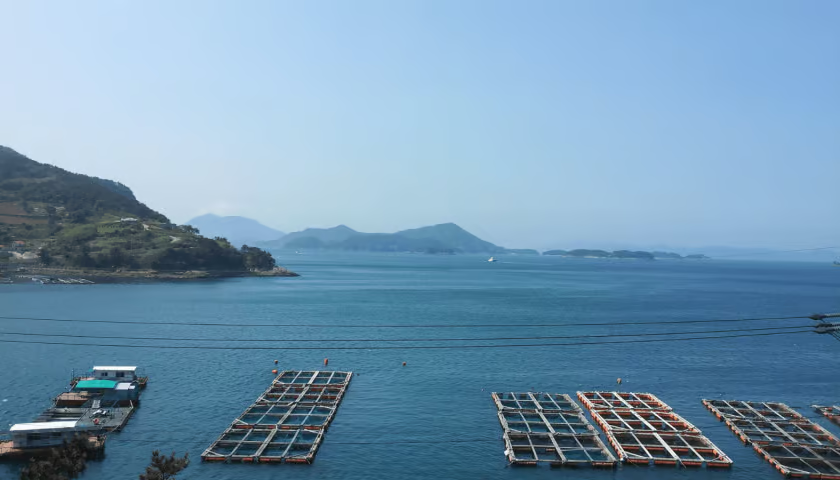
SEYCHELLES – Seychelles and India are exploring an exclusive bilateral agreement on fisheries and aquaculture as the two countries seek to expand cooperation in marine research, hatchery technology, tuna fisheries and the wider blue economy.
The proposal was discussed during a high-level bilateral meeting on August 25 between Seychelles’ Minister of Fisheries, Agriculture and Blue Economy, Wallace Cosgrow, and India’s Department of Fisheries Secretary, Abhilaksh Likhi.
The two sides reviewed existing cooperation frameworks and discussed an advanced work plan to turn bilateral agreements into practical projects.
Key areas identified include marine aquaculture, modern hatcheries, tuna fisheries, fish stock assessment, post-harvest technology and marine conservation.

The proposed fisheries and aquaculture MoU would also provide a framework for technical studies, fisheries extension services and institutional training to support knowledge transfer between the two countries.
Focus on aquaculture technology and fisheries management
Digital technology emerged as another potential area of cooperation, with officials discussing fisheries data systems and monitoring, control and surveillance infrastructure.
The countries also explored the use of artificial intelligence in harvest management and opportunities to improve tuna processing, product diversification and sustainable fish-waste management.

Strengthening aquaculture technology and hatchery capacity in Seychelles could support efforts to diversify marine production and improve domestic seafood supply.
Cooperation with India could provide access to technical expertise, research institutions and technologies across the fisheries value chain.
The two sides agreed on the need for an annual work plan, regulatory alignment, faster commercialisation of joint research, reciprocal laboratory access and jointly designed pilot projects.
India highlighted its expanding fisheries sector during the meeting, reporting national fish production of 19.7 million tonnes and seafood exports worth US$8.46 billion.
It also presented initiatives focused on sustainable fisheries management, responsible harvesting and technology-driven infrastructure.
Both countries plan to increase mutual exposure visits and specialised technical exchanges, including greater use of national Centres of Excellence to strengthen institutional capacity.
The cooperation comes as fisheries and aquaculture remain important to food security and livelihoods across the Indian Ocean region.
For Seychelles, a small island economy that depends heavily on marine resources, improved fisheries management, aquaculture technology, and value addition could help increase the economic returns generated from its aquatic resources.
The countries also identified opportunities to strengthen tuna processing and diversify seafood products, potentially allowing more value to be retained within the region rather than relying primarily on raw or minimally processed fish exports.
The meeting concluded with an agreement to develop result-oriented action plans for long-term maritime cooperation.
Bilateral trade also has room for expansion.
Official data showed that Seychelles imported US$91.73 million worth of goods from India in 2024, while exports to India reached US$2.46 million.
The proposed fisheries and aquaculture framework could therefore add a new dimension to the broader economic relationship while creating opportunities for technology transfer, research collaboration and investment across the Indian Ocean blue economy.
Sign up HERE to receive our email newsletters with the latest news updates and insights from Africa and the World, and follow us on our WhatsApp channel for updates

Be the first to leave a comment