

Zimbabwe farmers turn Juncao grass into livestock feed business
Juncao contains about 18.6% crude protein and a high natural sugar content (around 7%), making it excellent for making quality silage without adding extra molasses.
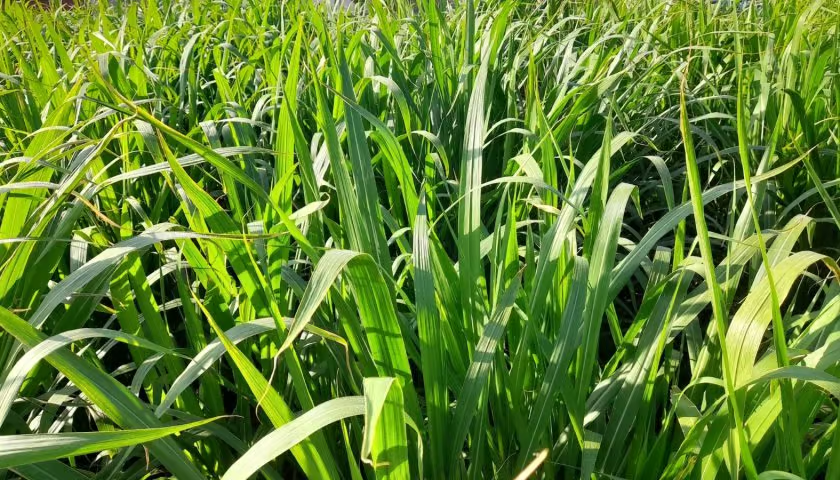
ZIMBABWE – Livestock farmers in Matabeleland are turning Chinese-origin Juncao grass into a growing feed business, selling planting material while using the fast-growing forage crop to build livestock feed reserves amid recurring drought and rising feed costs.
Cattle farmer Obert Chinamo sold more than 30,000 Juncao cuttings between April and August after establishing a seed bed in December 2025, highlighting growing interest in the crop as farmers seek affordable sources of livestock feed.
“I have already established a seed bed. I planted my seed bed on 18 December 2025 and it turned out to be gold. I should have planted a lot more,” Chinamo said.
Juncao is a fast-growing hybrid forage and multipurpose crop developed in China.

Originally used as a substrate for mushroom production, it has since been adopted for livestock feeding, hay and silage production, and soil conservation and land rehabilitation.
Chinamo said the grass could provide a high-value feed source for livestock and help farmers reduce their dependence on commercial feed.
Juncao targets Zimbabwe’s feed shortage
The crop is attracting attention in Matabeleland, where recurrent dry spells can reduce natural grazing and increase pressure on farmers to secure reliable fodder supplies.

Research officer at Matopo Research Institute, Obey Daga, said Juncao can be harvested several times during the rainy season, with production reaching at least 30 tonnes of fresh matter per hectare under suitable conditions.
“It can be harvested at least four times during the rainy season, giving a minimum of 30 tonnes of fresh matter per hectare,” she said.
Daga said the grass can also produce high protein levels during active growth and is suitable for silage because of its high brix content.
Livestock expert Addmore Chikohwa said Juncao had been introduced and tested in several African countries, including Kenya and South Africa.
In Zimbabwe, the crop is currently being multiplied at the Gwebi Varietal Testing and Characterisation Centre.
He said its nutritional characteristics had attracted interest from farmers producing beef and dairy cattle, sheep and goats.
However, Chikohwa cautioned farmers against relying on Juncao as a complete replacement for other forage crops.
He recommended integrating it with leguminous fodders such as lablab and velvet bean to improve the nutritional balance of livestock diets.
For farmers with irrigation, Juncao can also be produced beyond the rainy season and harvested periodically for preservation, potentially providing a year-round fodder source.
The crop’s role could extend beyond feed production.
Chikohwa said Juncao could be incorporated into soil conservation and circular farming systems, including use in waterways to help control erosion and recycling agricultural residues into livestock feed and soil amendments.
He encouraged farmers to establish diversified fodder systems that combine Juncao with other grasses and legumes, including Bana grass, Rhodes grass, forage sorghums, lucerne, lablab, velvet bean, and cowpeas.
Sign up HERE to receive our email newsletters with the latest news updates and insights from Africa and the World, and follow us on our WhatsApp channel for updates.


Be the first to leave a comment