
FAO pushes One Health action across agrifood systems
One Health is vital to livestock and feed production because animal health, feed safety, water quality and disease risks are closely linked.
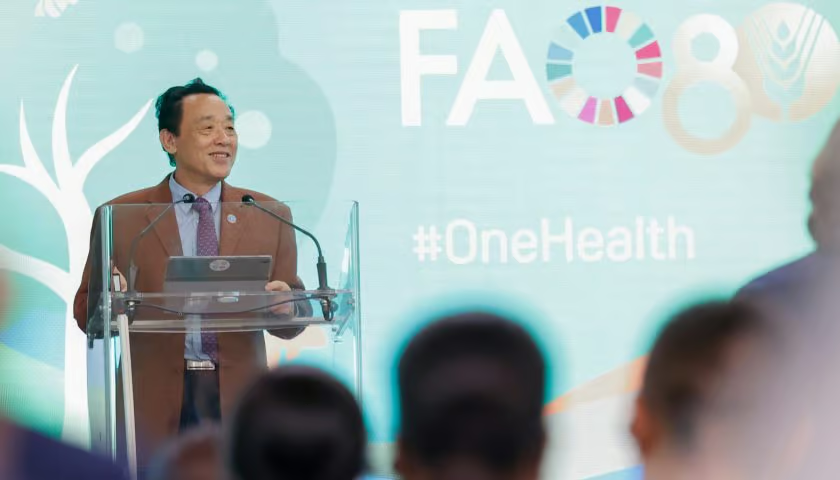
ITALY – The Food and Agriculture Organization of the United Nations (FAO) has convened a global conference in Rome to turn One Health principles into practical action across agrifood systems, with a new livestock intelligence hub launched to support early warning and evidence-based decisions.
FAO Director-General QU Dongyu opened the Global Conference for Actions on One Health in Agrifood Systems, highlighting the links between the health of people, animals, plants and ecosystems.
“One Health is a farmer’s agenda, a scientist’s agenda, and a Minister’s agenda,” Qu said, stressing the need for different government ministries and stakeholders to work together.
The approach is particularly relevant to livestock and feed production, where animal health, feed quality, water, disease risks and environmental conditions are closely connected.
FAO noted that degraded soil can affect crops and animal feed, while poor water quality can contribute to pathogen transmission between animals and people.
The organisation also highlighted the wider food-security impact of plant and animal health threats.
Pests and diseases destroy an estimated 20-40% of global crop production each year, while emerging diseases, antimicrobial resistance, climate change and food safety risks can affect multiple parts of agrifood systems simultaneously.
New livestock intelligence hub

FAO launched the Sustainable Livestock Transformation and One Health Intelligence & Knowledge Hub during the conference as a practical tool to support decision-making.
The online platform brings together livestock data, analytical tools, knowledge and information on FAO activities through a single gateway.
Its dashboards cover areas including livestock production, animal health risks, antimicrobial resistance, climate and environmental interactions, and economic and social issues.
A Livestock AI Assistant is also included to help users navigate FAO’s livestock information and tools.
FAO said the platform is designed to help users combine information from different sources, strengthening early warning, preparedness and evidence-based decisions. It also provides access to livestock projects, knowledge and expertise at country, regional and global levels.
The conference also featured the Global framework to accelerate action on avian influenza, presented by FAO, the World Health Organization (WHO), the World Organisation for Animal Health (WOAH) and the Convention on the Conservation of Migratory Species of Wild Animals (CMS).
The framework sets out joint goals and areas of collaboration on avian influenza across animal and public health, while also addressing wildlife protection.
The conference runs through 23 September and brings together government representatives, scientists, farmers and other stakeholders to discuss cooperation and investment.
It builds on FAO’s planned One Health in Agrifood Systems Framework, which is intended to guide countries in integrating One Health into policies, investments and programmes.
Sign up HERE to receive our email newsletters with the latest news updates and insights from Africa and the World, and follow us on our WhatsApp channel for updates.

Be the first to leave a comment