

Michigan tightens livestock entry rules to prevent New World screwworm spread
Michigan has implemented new domestic animal entry requirements to prevent the spread of NWS.
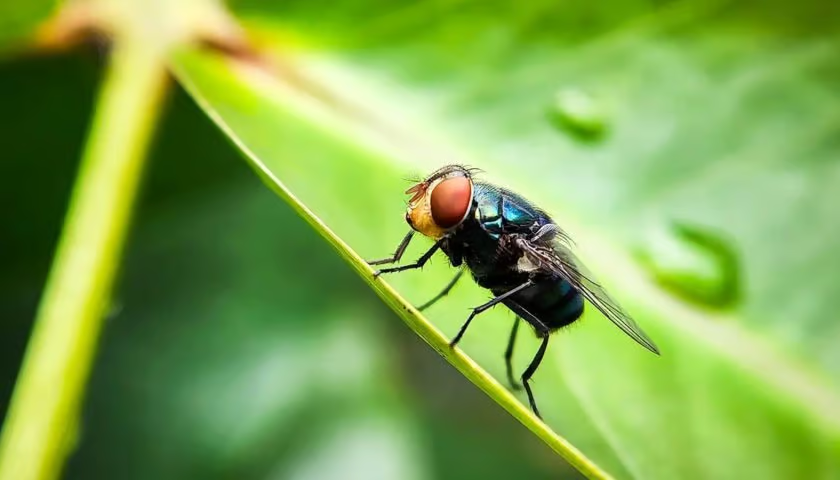
USA – The Michigan Department of Agriculture and Rural Development (MDARD) has introduced new domestic animal movement requirements effective June 17, 2026, to prevent the entry of New World screwworm (NWS) into the state following confirmed infestations in Texas and New Mexico, a move aimed at protecting livestock health, agricultural production and the state’s economy.
Although no cases have been detected in Michigan, state officials said proactive measures are necessary to reduce the risk of the parasite spreading into livestock populations.
The new requirements apply to certain warm-blooded domestic animals entering Michigan. Conditions vary depending on the NWS status of the state or region from which the animals originate.
MDARD has also launched a dedicated New World screwworm information portal to provide producers, veterinarians and pet owners with updates, prevention guidance and reporting resources.
“Michigan is taking decisive action to protect the health of our livestock and pets from New World screwworm,” said MDARD Director Tim Boring.
“These movement requirements are an important tool to keep this devastating pest out of our state.”
New World screwworm is considered one of the most destructive livestock parasites because its larvae feed on the living tissue of warm-blooded animals.
Infestations can lead to severe wounds, reduced animal performance, weight loss, lower productivity and, in severe cases, death if left untreated.
The pest can affect cattle, sheep, goats, horses, swine, wildlife and companion animals.
State Veterinarian Dr Nora Wineland urged producers to increase animal monitoring efforts.
“This parasitic fly poses a serious threat to the health of our livestock, pets and wildlife when cases go unnoticed, untreated and unreported,” she said.
She advised livestock owners to inspect animals daily for enlarging wounds, irritation and other unusual symptoms that could indicate infestation.
New restrictions focus on high-risk areas
Under the new rules, animals originating from premises officially identified as infested with New World screwworm are prohibited from entering Michigan until the site is released from quarantine.
Additional requirements apply to animals arriving from areas designated by the United States Department of Agriculture (USDA) as either an NWS Infested Zone or an Adjacent Surveillance Zone.
These include wound inspection protocols, preventative treatments and movement documentation designed to reduce the likelihood of transporting the parasite across state lines.
Certain poultry categories are exempt from the requirements, including hatching eggs, table eggs, chicks younger than five days of age and birds covered under specific National Poultry Improvement Plan classifications.
The measures highlight growing concerns across the livestock industry about the economic and animal health consequences of New World screwworm outbreaks.
Beyond animal welfare impacts, infestations can increase veterinary costs, disrupt livestock trade and reduce farm profitability.
Michigan added New World screwworm to its emergency reportable disease list nearly a decade ago.
The designation requires immediate reporting of suspected cases to state veterinary authorities, enabling rapid response and containment efforts.
MDARD is encouraging producers, transporters and veterinarians planning interstate animal movements to review the updated requirements before shipping livestock into the state.
Sign up HERE to receive our email newsletters with the latest news updates and insights from Africa and the World, and follow us on our WhatsApp channel for updates.


Be the first to leave a comment