

Rumin8 reports feed efficiency gains in US cattle trials as carbon credit potential grows
The new trial results demonstrate improved feed conversion efficiency in beef cattle.
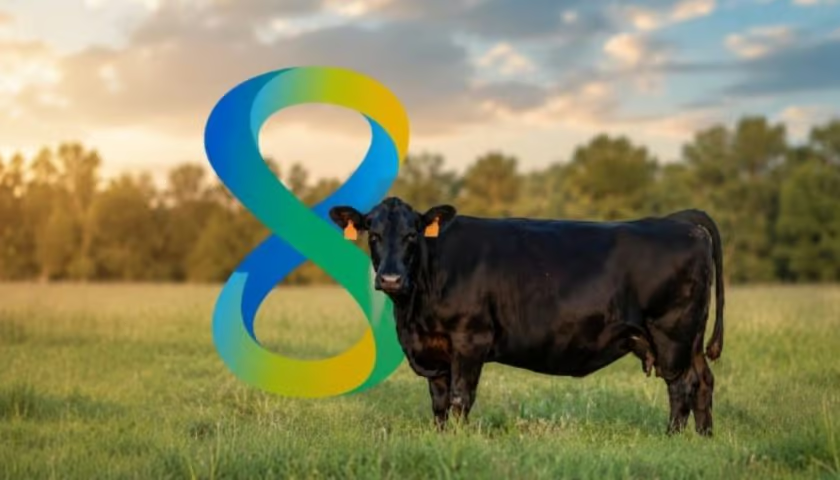
AUSTRALIA – Australian agritech company Rumin8 has reported improved feed conversion efficiency (FCE) and methane reductions in three U.S. beef cattle trials, strengthening the commercial case for its methane-reducing feed additive while creating new opportunities for livestock producers to generate carbon credits.
The preliminary trial results showed average improvements in feed conversion efficiency of 4.1%, 8.3%, and 10.7% compared with the control groups, along with significant reductions in enteric methane emissions.
According to the company, the combined productivity gains and emissions reductions could deliver economic benefits of up to US$137 per head annually at current beef and feed prices.
“The feed conversion efficiency figures alone underscore our product value and its attractiveness to cattle ranchers, farmers and feedlots,” said David Messina, Chief Executive Officer of Rumin8.
“When you look at the productivity figures and calculate how many extra kilograms of meat can be produced or kilograms of feed can be saved, and then put a dollar value on those savings, it makes a compelling case for including Rumin8 feed additives in a feedlot ration.”
Feed additive delivers productivity and sustainability gains
The first U.S. trial, involving Angus crossbred steers, recorded an 8.3% improvement in feed conversion efficiency and an 81% reduction in methane emissions compared with untreated animals.
A second three-month trial reported a 10.7% improvement in feed conversion efficiency, which was statistically significant (p < 0.01).
Meanwhile, a third commercial-scale trial involving 460 cattle recorded average daily gain 2.8% to 3.6% higher and a 4.1% improvement in feed conversion efficiency.
Beyond improving productivity, the methane reductions could provide producers with access to emerging carbon markets.
“The significant reduction in methane emissions gives ranchers and feedyards the option to monetise the associated carbon credits, supply low-carbon meat, benefit from the productivity benefits, or a combination of all three,” Messina said.
The U.S. findings build on previous trials conducted in Australia, Brazil and the United States.
Earlier research demonstrated average daily gain improvements of up to 12.5% in beef cattle and 4.6% higher milk yields in dairy cows.
Brazilian studies also reported 8.4% higher weight gain in pasture-fed cattle and up to 5% better feed conversion efficiency in feedlot systems.
Messina said the results support Rumin8’s long-standing hypothesis that reducing methane emissions enables cattle to redirect energy normally lost as methane towards growth and production.
“Our objective has been to develop a methane-abating feed additive where the productivity gain more than covers the cost of the product. The feed conversion efficiency benefits recorded in these trials indicate we are on track to achieve that objective,” he said.
In a related development, Rumin8 announced that carbon credits generated through a pilot project with Minerva Foods, one of South America’s largest beef processors and exporters, have now been independently certified.
The certification demonstrates that methane-reducing feed additives can create an additional revenue stream for livestock producers while supporting efforts to lower the environmental footprint of beef production.
Sign up HERE to receive our email newsletters with the latest news updates and insights from Africa and the World, and follow us on our WhatsApp channel for updates.

Be the first to leave a comment