

Skretting launches plant-based functional feed for Norwegian salmon
With Necto, the aquafeed company is introducing phytocomplexes into Norwegian salmon feed for the first time commercially.
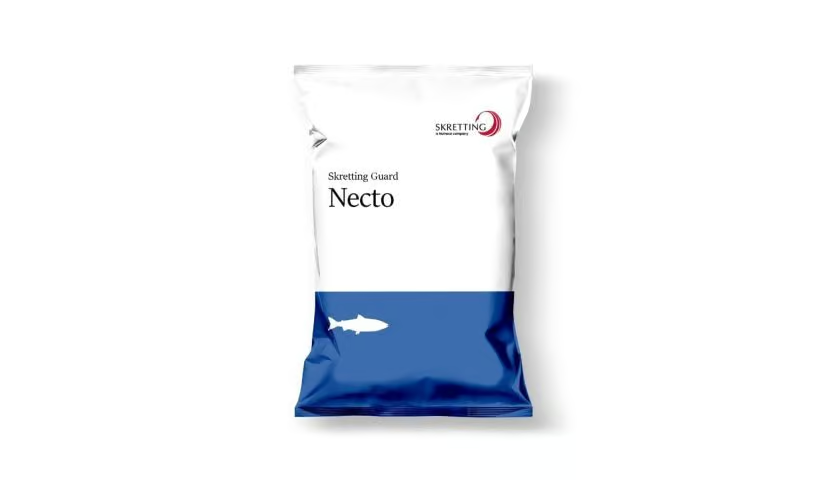
NORWAY – Skretting has launched its new plant-based functional fish feed, Necto, in Norway, introducing phytocomplex technology to Norwegian salmon production for the first time as the industry seeks new nutritional tools to improve fish health, welfare and resilience under increasingly challenging farming conditions.
The feed, which was first launched in October last year, uses combinations of bioactive plant-derived compounds to support fish physiology and help salmon better withstand stress, handling, and disease pressures.
The innovation is part of Skretting’s broader strategy to develop new phytocomplex-based solutions for the aquaculture sector.
“It represents a new way of working with fish health through nutrition. The industry needs more tools to strengthen fish resilience in the face of an increasingly complex range of challenges,” said Margunn Sandstad, Fish Health Manager at Skretting Norway.
The launch comes at a time when biological challenges continue to affect salmon farming performance in Norway.
Chronic inflammation has emerged as a growing concern for producers, with the condition reducing fish resilience, weakening their ability to cope with stress and contributing to higher mortality rates.
Skretting believes phytocomplexes could provide a new nutritional approach to supporting fish under these demanding production conditions.
Unlike conventional feed additives that often focus on individual compounds, phytocomplexes utilise multiple naturally occurring, plant-derived bioactive components that act synergistically to influence multiple biological processes simultaneously.
According to Linda Jensen, Researcher and Health Team Leader at Skretting Aquaculture Innovation, the technology aims to unlock the largely untapped potential of plant-based compounds for aquaculture applications.
“Plants represent a vast and partly untapped potential. When nature’s own compounds work together, we achieve a stronger effect than they do individually,” Jensen said.
The phytocomplexes used in Necto were developed specifically for aquaculture through collaboration between Skretting’s parent company, Nutreco, and Nutreco Exploration, the group’s research division focused on plant science and novel ingredient development.
Functional feeds gain importance in aquaculture
The launch reflects a wider trend in aquaculture toward functional feeds designed not only to provide nutrition but also to support fish health and production performance.
Controlled trials conducted by Skretting have shown promising results.
The company reported reduced expression of inflammation-associated genes and lower mortality in fish receiving the phytocomplex-based feed.
The next phase will focus on gathering data under commercial farming conditions to evaluate the technology’s performance in real-world production environments.
For fish farmers, improved management of chronic inflammation could contribute to stronger fish, better welfare outcomes and more stable production performance.
Sandstad emphasised, however, that functional feeds should be viewed as one component of a broader fish health strategy rather than a standalone solution.
“The health challenges in aquaculture are complex. Functional health feeds are not a standalone solution, but part of a broader approach in which different measures must work together,” she said.
As disease pressures and production challenges continue to evolve, innovations such as phytocomplex-based feeds are expected to play an increasingly important role in supporting sustainable salmon farming and improving fish health management across the aquaculture industry.
Sign up HERE to receive our email newsletters with the latest news updates and insights from Africa and the World, and follow us on our WhatsApp channel for updates.

Be the first to leave a comment