

Museveni backs feed industry expansion with push for stronger maize and soybean supply chains
President Museveni, Dutch Ambassador discuss boosting raw materials for the animal feed industry.

UGANDA – President Yoweri Kaguta Museveni has called for increased production of maize, cassava and soybeans after concerns emerged that Uganda’s growing animal feed industry is struggling to secure sufficient raw materials from local farmers.
The issue was raised during a meeting with the Netherlands’ Ambassador to Uganda, Frederieke Quispel, at State House Entebbe, where discussions focused on agriculture, animal feed production, aquaculture and economic cooperation between the two countries.
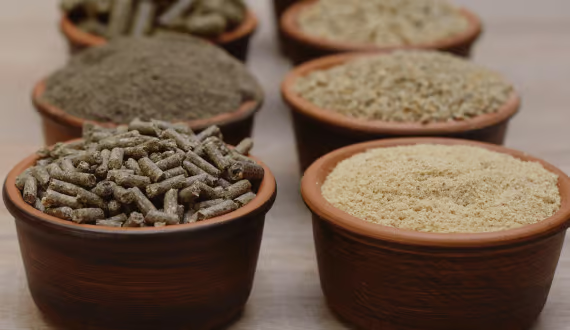
A key area of concern was the rising demand for feed ingredients needed to supply Dutch-backed investments in Uganda’s livestock and aquaculture sectors, including the De Heus fish feed factory in Jinja.
“We shall now produce more maize and cassava,” Museveni said, noting that he intends to convene a conference of maize growers to discuss ways of increasing output to meet growing industrial demand.
The President also proposed removing tax duties on locally produced animal feed, arguing that the move would support domestic manufacturing and encourage further investment in the sector.
According to Ambassador Quispel, feed manufacturers operating in Uganda are increasingly being forced to source raw materials from outside the country due to supply shortages.
“Those factories have difficulty in finding the raw materials and are forced to import some soya from Zambia, as well as maize and cassava. We work with smallholder farmers but the supply is still not enough,” she said.
She added that Dutch investors are prepared to support agricultural cooperatives to help increase production and strengthen supply chains for the feed industry.
“Our people are willing to invest in these cooperatives. There is a lot of demand for these raw materials for feed,” Quispel said.
The comments highlight a growing challenge facing East Africa’s feed sector, where investment in livestock, poultry and aquaculture production is expanding faster than local supplies of key feed ingredients.
Uganda has emerged as an important destination for investment in the feed industry in recent years, supported by growth in commercial poultry, dairy, and fish farming.
However, industry stakeholders have repeatedly pointed to inconsistent supplies of soybean meal, maize and other feed inputs as constraints to future growth.
The discussion also touched on aquaculture development, with Museveni emphasising fish farming as part of the government’s strategy to reduce pressure on wetlands and create alternative livelihoods for rural communities.
“I want you to do fish farming as a strategy to get the locals out of the wetlands. I want to get those rice growers out of the wetlands,” he said.
The Netherlands remains one of Uganda’s largest foreign investors, with approximately 60 Dutch companies currently operating in the country.
Quispel said Dutch investors remain optimistic about Uganda’s agricultural potential and are keen to deepen partnerships across feed production, farming and aquaculture value chains.
The meeting signals growing recognition that expanding local production of feed crops will be critical if Uganda is to support planned investments in animal agriculture while reducing dependence on imported feed ingredients.
Sign up HERE to receive our email newsletters with the latest news updates and insights from Africa and the World, and follow us on our WhatsApp channel for updates.

Be the first to leave a comment