

Wageningen scientists unveil breakthrough vaccine platform covering all African Horse Sickness serotypes
African Horse Sickness, which is transmitted exclusively by Culicoides biting midges, can kill up to 95% of infected horses.
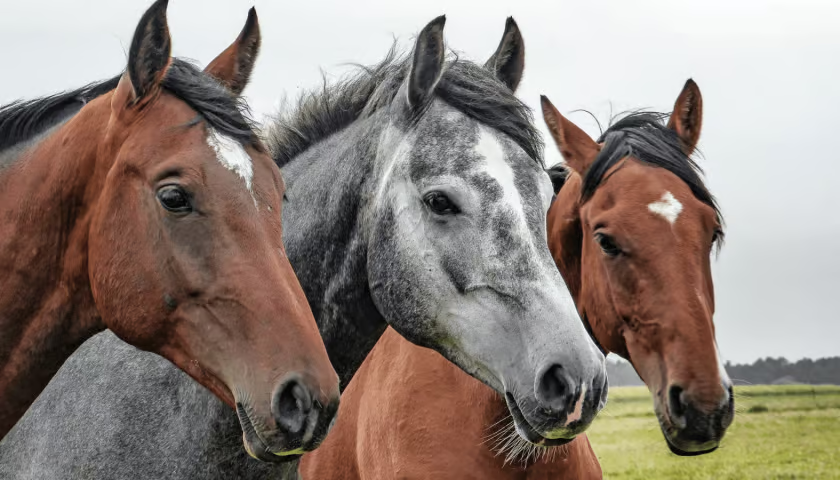
NETHERLANDS – Researchers at Wageningen Bioveterinary Research in the Netherlands have announced a major breakthrough in the fight against African Horse Sickness (AHS), unveiling a new vaccine platform that protects horses against all 9 known serotypes of the virus.
The platform, known as DISA-DIVA, marks the first time a single vaccine technology has been engineered to address the full spectrum of AHS strains.
The discovery offers a potentially transformative solution to a centuries-old equine disease that has caused catastrophic losses across Africa, the Middle East, and parts of Europe.
AHS, which is transmitted exclusively by Culicoides biting midges, can kill up to 95% of infected horses.
While donkeys, mules, and zebras typically experience milder disease, the virus poses persistent economic and emotional burdens, particularly in countries with large horse populations.
Wageningen’s DISA-DIVA platform is built using a Disabled Infectious Single Animal (DISA) virus with a targeted deletion in genome segment 10, an alteration that eliminates virulence, viremia, and midge-based transmission.
By swapping genome segments 2 and 6, which determine serotype specificity, researchers generated nine candidate vaccines named DISA1 through DISA9. The uniform deletion across all candidates also supports a Differentiating Infected from Vaccinated Animals (DIVA) diagnostic strategy.
“With DISA-DIVA platforms, we have developed a new innovative vaccine concept that offers vaccine safety, cost-competitive production and DIVA,” said researcher Rene van Gennip.
Piet van Rijn, who recently retired after two decades of orbivirus research, added that the platform represents “a promising step towards protecting horses worldwide, regardless of the AHSV serotype.”
A step toward safer global horse movement
The matching DIVA PCR test, designed to target the deleted region of genome segment 10, allows veterinarians to distinguish vaccinated animals from those infected with the wild-type virus.
This capability is essential for countries aiming to prevent spread through trade and for regions where competent midge vectors have already enabled circulation of related viruses such as bluetongue.
The DISA-DIVA vaccines have undergone extensive in vitro checks confirming their non-virulence and inability to be transmitted by insects. They are now ready for vaccination-challenge studies in horses, marking the final step before field deployment.
If proven effective in live-animal trials, the platform could reshape global AHS preparedness and offer a modern alternative to traditional live-attenuated vaccines, which have long raised safety concerns.
Sign up HERE to receive our email newsletters with the latest news updates and insights from Africa and the World, and follow us on our WhatsApp channel for updates.

Be the first to leave a comment