
ILRI launches RESTORE to revive livestock services amid conflict, climate challenge in Ethiopia
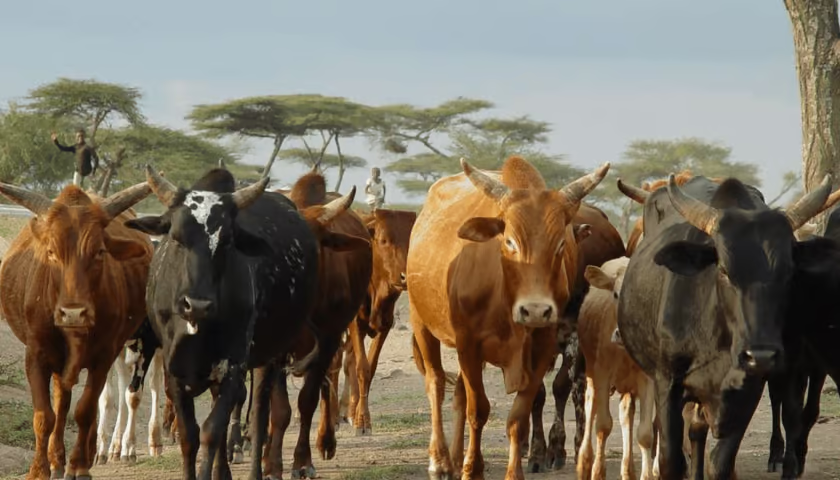
ETHIOPIA – The International Livestock Research Institute (ILRI) officially launched the Restoration of Livestock Services in Conflict and Drought-Affected Areas of Ethiopia (RESTORE) project on November 8, 2024.
This program was launched in partnership with the Ethiopian Veterinary Association (EVA) and various regional and national stakeholders.
This ambitious four-year initiative, funded by the European Union (EU), will run until 2028, aiming to address the compounded impacts of conflicts and climate-induced droughts on Ethiopia’s vital livestock-dependent communities.
With Africa’s largest livestock population, Ethiopia’s rural economy is deeply intertwined with the health and productivity of its livestock.
The sector serves as a lifeline for millions, providing food, income, and a buffer against poverty.
Yet, persistent droughts and disruptions from conflicts have crippled essential veterinary services and the resilience of rural livelihoods.
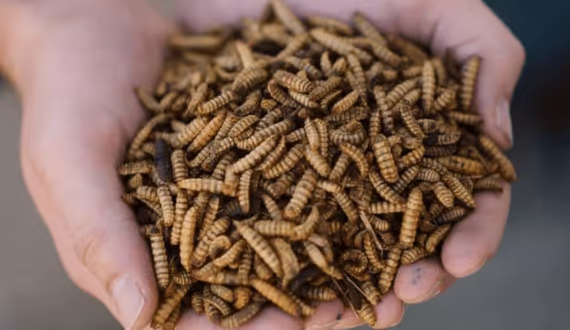
RESTORE seeks to reverse this trend by introducing a holistic strategy to improve livestock health, rebuild veterinary infrastructure, and enhance feed and byproduct quality.
RESTORE builds upon the successes of the EU-funded HEARD project and expands its focus to some of the most vulnerable regions, including Afar, South Ethiopia, Tigray, and parts of Amhara, Oromia, and Somalia.
The project’s objectives are ambitious yet grounded in practical solutions to the sector’s challenges:
- Rebuilding Veterinary Services: RESTORE will restore critical veterinary infrastructure, strengthen disease surveillance systems, and improve laboratory diagnostics, enabling quicker and more effective responses to livestock health crises.
- Innovative Disease Management: The project will better manage transboundary animal diseases by introducing advanced disease control methods and risk mapping, benefiting both public and private sector stakeholders.
- Boosting Livestock Feed Quality: A key pillar of the project focuses on improving the availability and quality of fodder. RESTORE will engage community actors and private enterprises to promote sustainable feed production practices.
- Enhancing Livestock Product Standards: By working closely with Ethiopian government agencies, RESTORE aims to improve compliance with health and safety standards, thereby boosting the quality and marketability of Ethiopian livestock products locally and internationally.
- Improving By-Product Value: The project also prioritises increasing the market value of hides and skins by enhancing their quality, providing a much-needed economic uplift for rural communities.
EU’s role in sustainable livestock development
The EU has steadfastly supported Ethiopia’s livestock sector, investing over €90 million (ETB 12 billion) in the past decade.
Beatrice Neri, the EU’s team leader for Sustainable Agriculture, emphasised the EU’s commitment to balancing economic viability with social and environmental responsibilities.
“Through RESTORE, we aim to promote sustainable livestock practices that improve livelihoods and contribute to climate resilience,” she remarked.
ILRI’s leadership, in collaboration with the Ethiopian Veterinary Association and regional bureaus, underscores the importance of multi-stakeholder engagement.
Namukolo Covic, ILRI’s director general’s representative to Ethiopia, highlighted the sector’s potential if critical challenges like disease outbreaks are mitigated.

Theo KnightJones, an ILRI principal scientist, added, “RESTORE’s holistic approach, addressing veterinary services, feed production, and byproduct improvement, ensures sustainable solutions for Ethiopia’s livestock sector.”
As climate change exacerbates Ethiopia’s vulnerability to extreme weather, RESTORE’s focus on improving livestock health and reducing greenhouse gas emissions aligns with the country’s broader climate goals.
The project aims to reduce the environmental footprint of livestock farming while securing livelihoods for rural communities by enhancing animal health and production systems.
Sign up HERE to receive our email newsletters with the latest news updates and insights from Africa and the World and follow us on our WhatsApp channel for updates.


Be the first to leave a comment