
Norway’s fish farmers urged to consider culling as deadly jellyfish infestations threaten salmon welfare
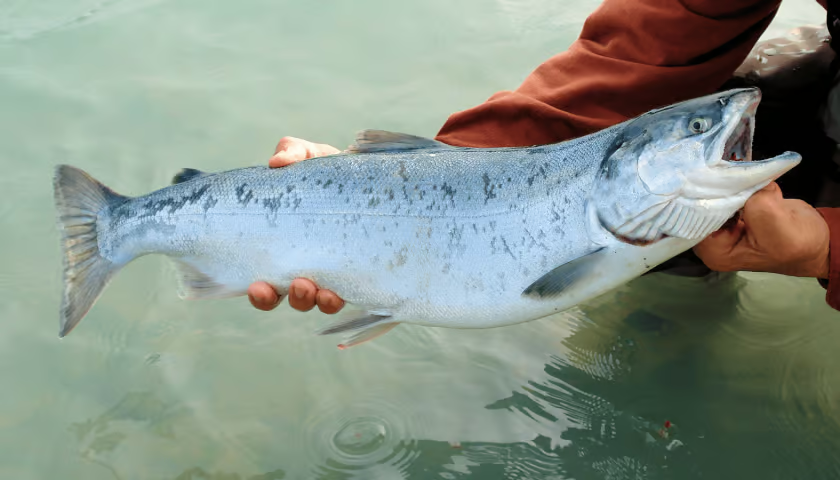
NORWAY – The Norwegian Food Safety Authority (Mattilsynet) has issued an urgent warning to salmon farmers across the country following reports of widespread injuries and fatalities among farmed salmon caused by venomous barbed-wire and string of pearls jellyfish.
In recent days, these jellyfish have been observed in numerous production areas, inflicting severe burns on the skin and gills of the salmon and putting the fish at heightened risk for infection and disease.
“It is unacceptable to face another winter where almost half the fish harvested have open wounds, as was the case last year,” said Bård Skjelstad, Director of Mattilsynet’s Aquaculture Supervision Division.
The injuries and increased stress levels make the fish vulnerable to prolonged suffering and additional health complications, Skjelstad added, emphasising the need for immediate action.
Mattilsynet has advised that fish farmers implement strict monitoring and readiness plans to prevent long-term suffering among affected fish. Farmers are encouraged to remove severely injured fish from enclosures and humanely euthanize them.
If individual removal is not feasible, Mattilsynet advises considering the complete culling of affected enclosures to prevent unnecessary suffering.
“The most important responsibility the animal owner has in such a situation is to protect the fish from long-term suffering,” Skjelstad said.
He called on fish farms to act swiftly, noting that early preventative action can help mitigate the spread of stress and infection within fish stocks.
To help farmers manage these outbreaks, Mattilsynet recommends specific welfare measures, including systematic monitoring of fish conditions in enclosures impacted by jellyfish, sufficient capacity to quickly cull affected stock, and the resources to handle sudden increases in mortality rates.
As Mattilsynet works closely with fish farms across Norway to develop preventative strategies, farmers have been urged to stay vigilant.
The authority has also offered further guidance and resources to support fish farmers in implementing effective emergency response plans that prioritise animal welfare.
This is a major issue to Norwegian farmers, as Norway is the largest producer of farmed salmon in the world, with a yearly production of 1.2 million tonnes.
While this level of production is seemingly impressive, the country has been criticized for the effects of salmon aquaculture on wild-caught fish species used to provide nutrients for the farmed fish.
Sign up to receive our email newsletters with the latest news updates and insights from Africa and the World HERE.

Be the first to leave a comment