

Colombia lifts controversial ban on U.S. beef imports amid avian flu concerns
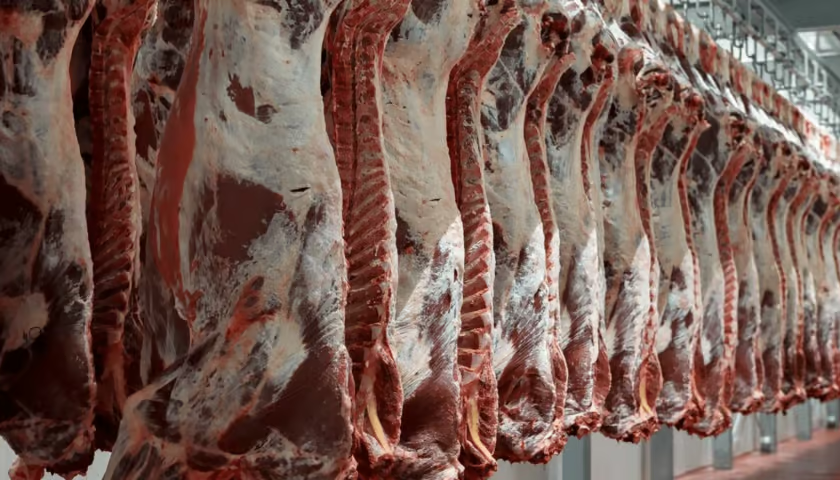
COLOMBIA – The government of Colombia has lifted its ban on U.S. beef imports from states affected by the H5N1 avian flu virus, marking the end of a restriction that had been in place since April.
The ban targeted states where dairy cattle were impacted by the virus, even though U.S. industry experts argued there was no scientific justification for such a restriction since beef herds were unaffected.
The U.S. Meat Export Federation (USMEF), along with various U.S. government bodies including the USDA’s Animal and Plant Health Inspection Service (APHIS), played a key role in resolving the issue.
Dan Halstrom, President and CEO of USMEF, praised the efforts of USDA staff stationed in Bogotá, as well as Colombian importers who remained loyal to U.S. beef despite the trade halt.
Prior to the ban, Colombia was the largest importer of U.S. beef, with trade valued at around US$3 million per month.
The restriction, which applied to beef from states where H5N1 was found in both poultry and dairy cattle, caused a significant decline in exports, with July’s figures falling to less than US$850,000.
However, the U.S. beef industry is now poised to rebuild its presence in the Colombian market.
While Colombia was the only country to impose this specific restriction, U.S. government engagement helped prevent similar barriers in other markets.
The lifted ban comes as a welcome relief, and the industry now looks forward to resuming trade at pre-ban levels.
The H5N1 virus, primarily affecting birds, has caused significant challenges worldwide. Recent outbreaks in Nigeria and Denmark have highlighted the ongoing struggle to contain the virus, particularly in regions where domestic poultry interacts with wild birds.
In related news, the first U.S. commercial poultry flock to be struck by highly pathogenic avian influenza (HPAI) in two months involved 62,800 turkeys, the United States Department of Agriculture (USDA) Animal and Plant Health Inspection Service (APHIS) reported.
APHIS previously reported that the presence of HPAI was confirmed in a commercial meat turkey flock in Merced County, California, on September 18.
However, the initial report did not state how many birds were affected. APHIS has since updated its website to include the flock size.
Before this instance of HPAI, the virus was last found in a U.S. commercial poultry flock on July 19. The last time California had a commercial poultry flock affected by HPAI was January 18.
That flock infection also occurred in Merced County. On January 3, California had three commercial flocks struck by HPAI, two in Merced County and the other in Sonoma County.
So far, the H5N1 strain has struck all commercial poultry flocks in the United States that were affected by HPAI during the 2022-24 outbreak.
Sign up to receive our email newsletters with the latest news updates and insights from Africa and the World HERE.

Be the first to leave a comment