

WOAH members adopt new 10-year global plan to strengthen fight against AMR
WOAH said that the implementation of the strategy will focus on supporting countries in translating the global objectives into practical national actions.
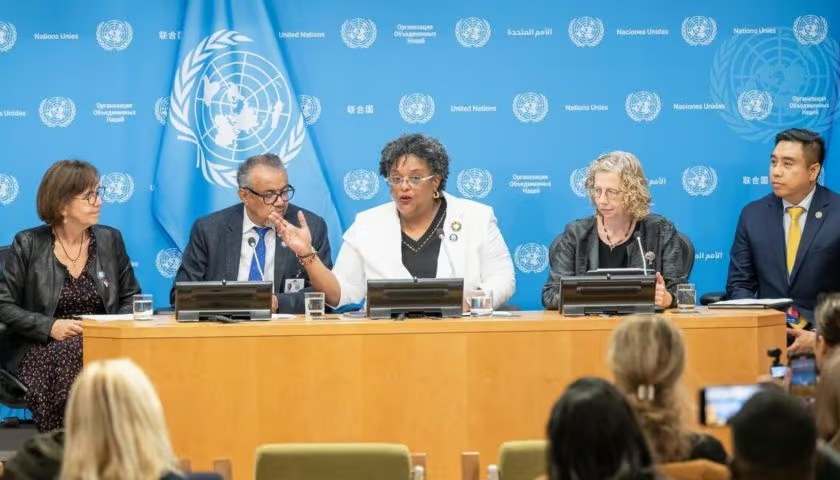
FRANCE – Member countries of the World Organisation for Animal Health (WOAH) have adopted an updated Global Action Plan on Antimicrobial Resistance (GAP-AMR) 2026-2036, reinforcing international efforts to curb antimicrobial resistance (AMR) through a coordinated One Health approach spanning human, animal, plant and environmental health.
The plan was approved by WOAH’s 183 Members during the organisation’s 93rd General Session on 21 May 2026, making WOAH the first of the Quadripartite organisations to formally adopt the updated strategy.
The decision was followed two days later by the World Health Organization (WHO), whose Member States also endorsed the plan during the World Health Assembly.
WOAH said the adoption marks a major milestone in implementing the commitments made under the United Nations Political Declaration on Antimicrobial Resistance and strengthens global cooperation against one of the most significant threats to public and animal health.
The updated roadmap outlines six strategic priorities for the next decade: improving awareness and behavioural change, strengthening surveillance and laboratory networks, preventing infections, ensuring responsible access and use of antimicrobials, accelerating research and innovation, and reinforcing governance, financing and accountability.
Stronger stewardship for animal health
For the livestock sector, the new action plan places particular emphasis on strengthening veterinary services and promoting the responsible use of antimicrobials to preserve their effectiveness while safeguarding animal health, food production and trade.
Antimicrobial resistance has become a growing concern in animal agriculture, where the emergence of resistant bacteria threatens the effectiveness of medicines used to treat livestock diseases.
Failure to control AMR could increase animal mortality, reduce farm productivity and compromise food security.
WOAH said that the implementation of the strategy will focus on supporting countries in translating the global objectives into practical national actions through operational guidance, technical support, and capacity building.
The organisation is also developing a global Monitoring and Evaluation Framework to track progress in implementing the action plan and assess its impact across sectors.
In addition, WOAH plans to launch a series of webinars to help veterinary authorities strengthen antimicrobial stewardship programmes within national animal health systems.
The updated plan was developed jointly by the Quadripartite partnership comprising WOAH, the Food and Agriculture Organization of the United Nations (FAO), the United Nations Environment Programme (UNEP) and the World Health Organization (WHO) following extensive consultations with governments, technical experts and stakeholders.
While FAO and UNEP are continuing their internal approval processes, WOAH said the focus has now shifted from policy development to implementation.
According to the organisation, the next decade will be critical to protecting the effectiveness of antimicrobials through coordinated action across the veterinary, public health, agriculture, and environmental sectors, ensuring these essential medicines remain effective for both animals and humans.
Sign up HERE to receive our email newsletters with the latest news updates and insights from Africa and the World, and follow us on our WhatsApp channel for updates.


Be the first to leave a comment