Sustainability
-
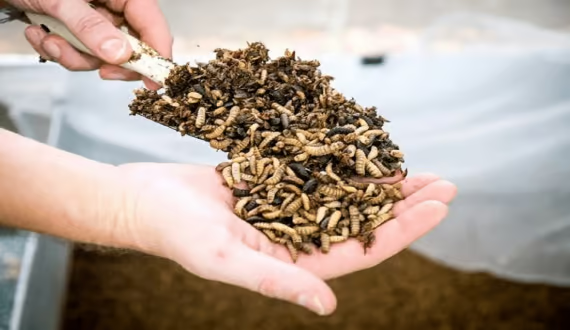
Innovafeed renews B Corp certification as it recalibrates North American expansion
The renewed certification validates its fully circular model, which relies on repurposing agricultural by-products to produce insect-based protein.
-

Rumin8 acquires Roam to accelerate global cattle methane-cutting technologies
Neither of the parties has revealed the financial terms of the transaction yet.
-
Africa advances aquatic biodiversity protection at high-level Mombasa meetings
The continent’s full blue economy is estimated to be worth US$300 billion per year, with potential to grow to US$405 billion by 2030 and up to US$576 billion by 2063.
-
Sandhya Marines becomes India’s first shrimp feed miller to earn ASC feed certification
The company says the new certification strengthens its ability to serve international markets seeking verified sustainability credentials.
-
WAS, WorldFish earn global recognition for advancing sustainable aquatic food systems
WAS received special recognition for its decades-long contribution to global aquaculture development, particularly its support to FAO programmes since the 1970s.
-
Innovative soy chain set to cut broiler feed emissions by more than a third
The initiative targets one of the biggest contributors to poultry emissions: feed production, which accounts for about 78% of a broiler’s total greenhouse gas footprint.
-
Vitapro highlights 2024 sustainability milestones in latest report
The company first launched its Sustainability Roadmap in 2021 and says the plan is now delivering measurable impact across economic, environmental, and social areas.
-
Salmon Group steps up use of novel feed ingredients to advance fish health and sustainability
Since 2017, the group has steadily expanded its use of sustainable raw materials, starting with algae oil.
-
Thailand’s CPF’s Ban Bueng Mill secures ASC Feed certification
The ASC Feed Standard is globally regarded as one of the most rigorous frameworks for responsible feed production.
-
New facility to convert UAE’s surplus bread into sustainable animal feed
This model has already proved successful in Australia, where an existing facility has processed over 64,800 tonnes of surplus bread.