Nigeria
-

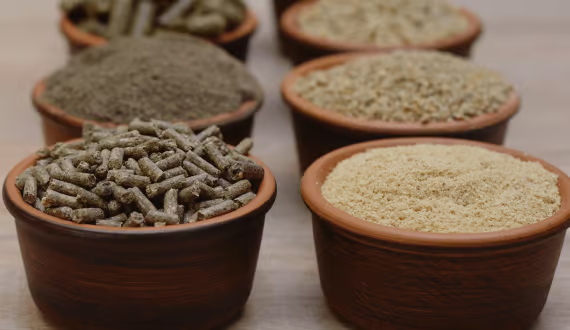
Nigeria feed project converts crop residues into commercial ruminant feed solutions
Feed accounts for 60-70% of production costs, and this approach could reduce dependence on conventional feed inputs by 30-40%.
-

World Bank-backed L‑PRES marks milestones as Nigeria eyes inclusive livestock growth
The initiative is expected to benefit approximately 1.43 million individuals nationwide, with at least 30% of participants being women.
-
Jigawa State launches 100,000-Hectare alfalfa project to boost livestock feed and value chain
The project will generate significant employment opportunities, reduce farmer-herder conflicts, and increase access to nutrient-rich feed.
-
Biovet expands technical engagement with feed producers in West Africa
The mission focused on addressing feed safety, mycotoxin control and intestinal health challenges in livestock production.
-
Nigeria signs trilateral partnership with Brazil, UK to modernise livestock sector
The long-term goal is to increase local meat and dairy production, reduce imports, improve farmer incomes, and position Nigeria as a leading livestock producer in West Africa.
-
Namibia reports first H5N1 case since 2022 amid Nigeria, South Africa outbreaks
According to WOAH, H5N1 is affecting poultry and wild birds across multiple African countries, with Mozambique reporting a novel low‑pathogenic variant.
-
Nigeria’s Gombe state signs livestock innovation agreement with New Zealand firm
Federal government advances nationwide livestock transport and data reforms.
-
Jigawa governor leads Argentina mission to scale forage farming and agribusiness
Jigawa State is studying Argentina’s forage systems to raise feed supply, support livestock growth, and open export routes to Middle Eastern markets.
-
Avian influenza detected for the first time in Europe
This discovery followed the confirmation of avian influenza in a cat on the same farm.
-
Nigeria warns of escalating livestock feed crisis, urges regional action
The government finds this situation concerning as inadequate nutrition for animals threatens incomes, food security, and community stability.