

Kenya to develop large-scale lucerne project with feed mill in Tana River
Lucerne farming involves cultivating a perennial legume widely known as alfalfa.
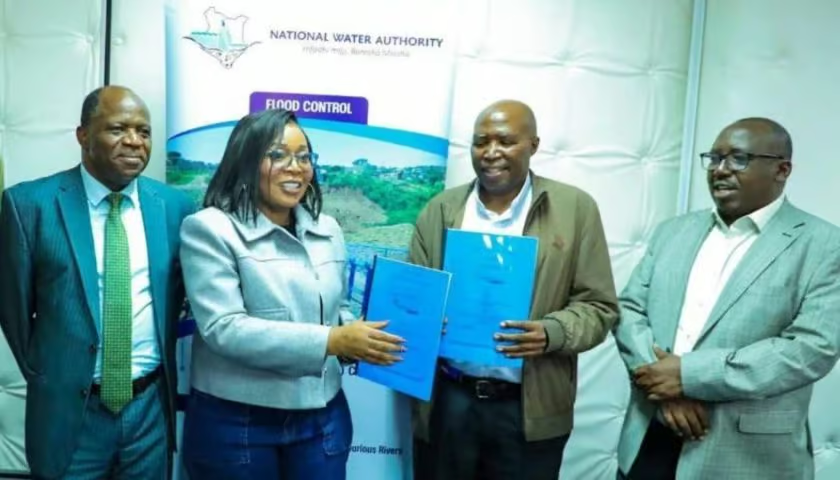
KENYA – Stella Mundi (PVT) Ltd has unveiled a large-scale irrigated lucerne production project in Tana River County that will include a modern feed mill and position the region as a major livestock feed production hub for domestic and export markets.
The project, developed in partnership with the National Water Harvesting and Storage Authority (NWHSA) and the Tana River County Government, will use irrigation water drawn from the Tana River to cultivate lucerne (alfalfa), a high-protein forage widely used in dairy, beef, sheep and goat production.
According to Stella Mundi Managing Director Mayor Mangeya, the development will be implemented in four phases.
The first phase will focus on commercial lucerne production, followed by an expansion to 7,000 hectares and the construction of a feed mill to process, blend and fortify livestock feed locally.
The third phase will increase cultivation to 12,000 hectares to support export markets, while the final phase will establish an integrated livestock platform for beef cattle, dairy and goat production.
Lucerne, often referred to as the “Queen of Forages,” contains between 18% and 24% crude protein and is valued for its high digestibility, mineral content and ability to fix nitrogen in the soil.
The forage is widely used to improve livestock productivity while reducing dependence on commercial concentrate feeds.
The project is primarily targeting growing demand for quality forage in Middle Eastern markets, where livestock producers rely heavily on imported fodder.
By combining irrigated forage production with local feed manufacturing, the investment aims to strengthen Kenya’s position in the regional livestock feed industry.
Water infrastructure for the project will be developed by NWHSA through an extensive pipeline network supplying irrigation from the Tana River.
Beyond feed production, the investment is expected to create employment opportunities, attract additional private investment and stimulate value addition within Kenya’s livestock sector.
Mangeya said the project also includes a proposed Sovereign Fund Fee equivalent to 2% of topline revenue to compensate local communities for land contributed to the initiative.
The county government and surrounding communities are projected to receive about US$2 million during the first five years of operation, rising to approximately US$4 million within the first decade.
NWHSA Chief Executive Officer Julius Mugun and Board Chairperson Jane Mwikali said the investment would improve livelihoods through expanded agricultural production, employment creation, increased exports and stronger food security.
Once completed, the integrated forage production and feed manufacturing project is expected to establish Tana River as one of East Africa’s leading livestock feed production centres while supporting the region’s growing dairy and beef industries.
Sign up HERE to receive our email newsletters with the latest news updates and insights from Africa and the World, and follow us on our WhatsApp channel for updates
Be the first to leave a comment