
Livestock
-
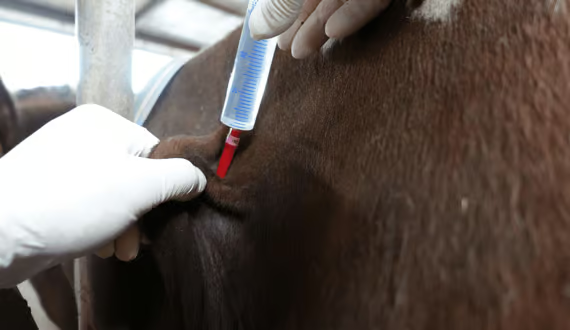
Stakeholders push for stronger oversight as Nigeria’s livestock industry expands
The renewed focus on sustainable livestock practices comes just months after Niger State announced a US$100 million offtake agreement with the Saudi Export and Import Bank.
-

Genome editing signals a new era in African livestock
Kenya is the the first African country to issue a regulatory determination for a heat-tolerant genome-edited cattle breed.
-
APMD strengthens coordination and investment in Kenya’s livestock value chain
Feedlot operators have concerns about high feed costs, limited access to affordable financing, and logistical bottlenecks that drive up production costs.
-
South Africa boosts rural livestock health through veterinary entrepreneurship
Access to veterinary services in remote communities is often constrained by workforce shortages and shifting public sector priorities.
-
Lallemand launches interactive program to advance ruminant digestive health
The educational content includes the biology and interaction between the rumen and lower gut, support for dairy calves from birth through lactation, and the importance of maintaining a balanced microbiota.
-
Somalia eyes US$1B in livestock exports by end of 2025
Recent estimates place the national herd at about 56 million animals, while approximately 31.5 million head of livestock were exported between 2018 and 2024.
-
WOAH raises alarm over spread of avian influenza in cattle
The organization urged members to share genetic sequences of avian influenza viruses in public databases and to employ scientifically justified import measures rather than blanket trade bans.
-
SRUC launches world’s first open-source digital twin to transform dairy farming
Farm-twin is a virtual replica of the entire farm system powered by real-time data from sensors, telemetry, and digital tools.
-
Nigeria, FAO join forces to curb livestock diseases
The initiative aims to strengthen the country’s capacity to detect, prevent, and respond swiftly to zoonotic and transboundary animal diseases.
-
Uganda introduces Jianzhou Big Ear goats from China to boost livestock productivity
Officials hopes that the Jianzhou Big Ear goats could lay the groundwork for improved meat production, stronger rural livelihoods, and a more resilient livestock sector.