
Somalia eyes US$1B in livestock exports by end of 2025
Recent estimates place the national herd at about 56 million animals, while approximately 31.5 million head of livestock were exported between 2018 and 2024.
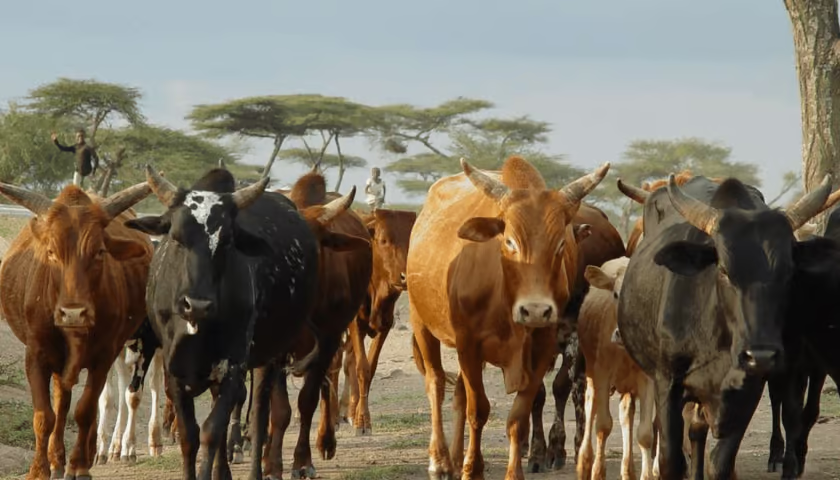
SOMALIA – Somalia projects that its livestock exports could reach over US$1 billion by the close of 2025, marking what would be the country’s highest-ever export earnings from the sector, according to estimates from the Ministry of Livestock and Fisheries.
The forecast follows a steady upward trend over the past decade, during which export revenues have climbed each year.
Data from the Central Bank of Somalia show that earnings from live animal sales rose from US$311.1 million in 2018 to US$970 million in 2024, nearly tripling in value.
Most of the exported animals are sheep and goats, which account for close to 90% of Somalia’s total livestock exports each year.
The continued expansion of the livestock trade has been supported by strong demand from Middle Eastern markets, particularly Gulf states such as Saudi Arabia, Oman, Kuwait, and Qatar.
TradeMap data indicate that the region imported roughly US$2.4 billion worth of sheep and goats in 2024, representing around 77% of global imports.
Speaking to Bloomberg on October 17, Qaasim Abdi Moallim, director of animal health at the Ministry of Livestock, said Somalia has increased exports by filling the gap left by Sudan and Australia, whose market shares have declined.
Sudan’s ongoing conflict has disrupted trade routes since 2023, while Australia is gradually phasing out its live animal exports by sea by 2028 due to animal welfare restrictions.
Expanding herd capacity sustains exports
Somalia’s livestock population remains stable despite years of high export volumes, supporting a consistent supply to international buyers.
Recent estimates place the national herd at about 56 million animals, while approximately 31.5 million head of livestock were exported between 2018 and 2024.
Analysts say this reflects strong herd regeneration and sustained productivity despite recurring droughts in the Horn of Africa.
The sector has also gained from international development projects designed to improve production systems and resource management.
Among them is the US$17.1 million RAAISE program launched in 2021 with European Union funding to strengthen livestock and fisheries value chains.
Another major initiative is the Barwaaqo project, funded by the World Bank at a cost of US$70 million, which focuses on improving water access and pastoral infrastructure in dry areas.
Together, these efforts have allowed Somalia’s livestock industry to remain resilient, making it one of the few economic sectors showing consistent growth despite challenging climatic and political conditions.
Sign up HERE to receive our email newsletters with the latest news updates and insights from Africa and the World, and follow us on our WhatsApp channel for updates.
Be the first to leave a comment