ILRI
-
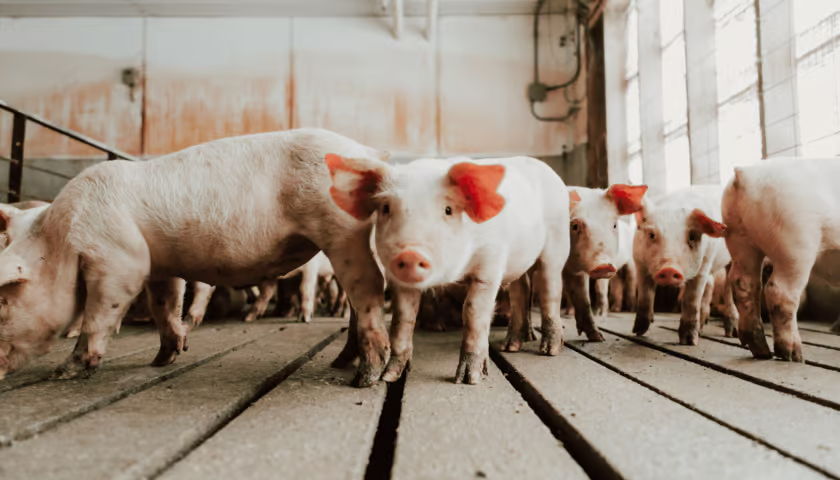
Uganda research investigates pig feed as potential ASF pathway
To combat African Swine Fever, ILRI and the National Agricultural Research Organisation (NARO) are collaborating on new research to evaluate the likelihood of ASFV spreading via pig feeds.
-

ILRI wins US$1.45M grant to strengthen AI-driven disease surveillance in Africa
The funding will advance AI-driven data analyses for genomics surveillance in low and middle-income countries
-
Livestock needs more climate funding ahead of expected super El Niño, ILRI says
Experts are warning governments to increase climate finance for livestock ahead of an expected super El Niño.
-
ILRI, Innoterra partner to transform crop residues into sustainable livestock feed
The initiative to transform crop residues into high-quality livestock feed
-
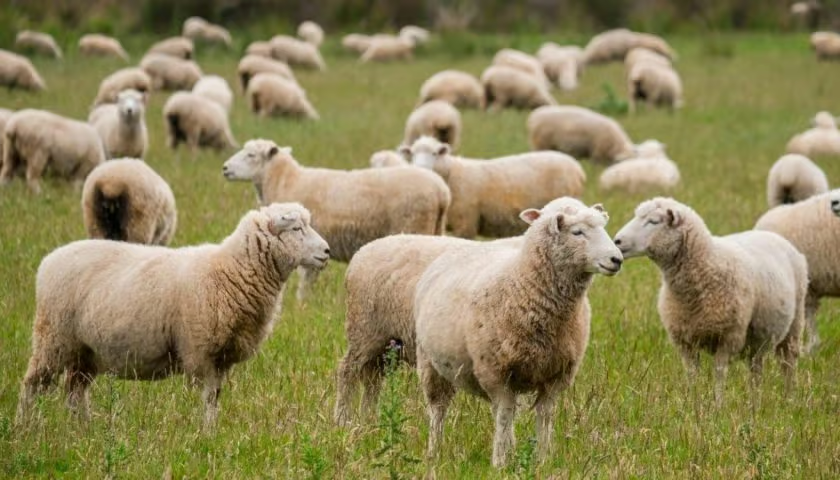
Red Maasai sheep emerge as climate-resilient breed with strong potential for genetic improvement, ILRI study finds
These indigenous East African sheep demonstrate exceptional resilience to heat, parasites and challenging environmental conditions
-
Kenya secures US$42M grant to cut livestock methane emissions
The livestock sector contributes 28% of the total national emissions, which is over 90% of total agricultural emissions.
-
WAF launches Kenya, Nigeria councils to drive feed and agribusiness growth
The dual launch reflects a broader shift toward coordinated, innovation-led agricultural development in Africa.
-
Nigeria targets US$3B pastoral livestock investment as feed costs expose sector gaps
The sector supports around 75 million livelihoods and contributes roughly 5% to GDP, valued at about US$32 billion.
-
ILRI assesses BSFL production systems to scale alternative protein for feed in East Africa
Under the project, ILRI is working with private sector partners, including InsectiPro in Kenya and Chanzi Group in Tanzania
-
Common livestock dewormers may be failing across Africa, ILRI reports
In sheep alone, infections can lead to a 58% reduction in weight gain, a 90% loss in wool production, and a 78% decline in milk yield