

Kenya steps up research to drive sustainable aquaculture
This research seeks to generate evidence for healthier marine ecosystems, sustainable blue food production and improved coastal livelihoods.
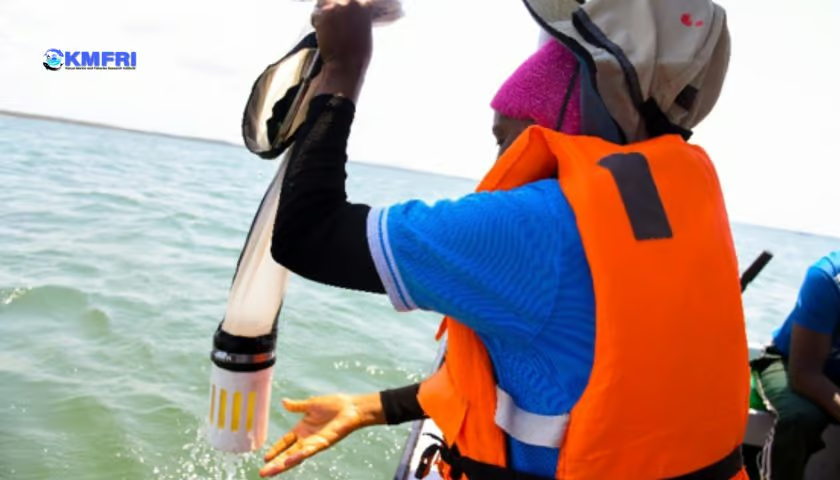
KENYA – The Kenya Marine and Fisheries Research Institute (KMFRI) and Norway’s Institute of Marine Research (IMR) have launched a multidisciplinary research exercise in the Shimoni-Vanga seascape to generate scientific data to support sustainable fisheries, coastal aquaculture, and broader blue food development in Kenya.
The seven-day field expedition forms part of the Strengthening Sustainable Blue Food Systems in Coastal Kenya (SBFS-Kenya) project, a 2025-2028 collaboration funded by Norway through the Ocean for Development programme.
The wider programme focuses on strengthening food security, livelihoods, and nutrition while improving the sustainable use of marine resources.
Researchers collected water and sediment samples, assessed phytoplankton and zooplankton, examined coral reefs and seagrass habitats, recorded fish and invertebrate populations and deployed equipment to gather data on the seafloor.
The findings are expected to provide baseline information on the health, productivity and ecological characteristics of the Shimoni–Vanga marine environment.
For Kenya’s aquaculture sector, understanding these conditions will be important as the country seeks to develop coastal and marine production while managing environmental pressures.
The SBFS-Kenya programme includes coastal and marine aquaculture, fisheries stock assessment, post-harvest loss reduction and value addition, food quality and safety, and climate resilience among its areas of focus.
Research to support sustainable aquaculture growth

The expedition also examined seagrass ecosystems and their relationship with fish populations and activities such as seaweed farming.
Researchers are assessing how these habitats contribute to fisheries productivity and how ecosystem information can guide future fisheries and mariculture interventions.
The work comes as KMFRI and its partners place greater emphasis on environmental monitoring as part of developing sustainable blue food systems.
In a separate activity under the same project, researchers and technical officers recently received training on monitoring the environmental impacts of open-cage aquaculture using the Monitoring–Ongrowing Fish Farms Modelling (MOM) system.
The wider SBFS-Kenya programme is being implemented in the Shimoni–Vanga region of Kwale County, where coastal communities depend on marine resources for food and income.
The initiative is also intended to support marine spatial planning and the development of a sustainable ocean plan for the area.
The Norwegian-supported programme has an investment of NOK 40 million (about US$3.9 million) over four years from 2025 to 2028.
The latest expedition will now move into the analysis stage, with samples and field data undergoing further laboratory and scientific assessment.
Kenya’s emerging blue food economy and the resulting evidence could help researchers, policymakers and industry stakeholders better understand how marine resources can be developed for food production while maintaining the ecosystems that support fisheries, aquaculture and coastal livelihoods.
Sign up HERE to receive our email newsletters with the latest news updates and insights from Africa and the World, and follow us on our WhatsApp channel for updates.

Be the first to leave a comment