

Kenya fish farm targets East African ornamental fish market
The farm has 15 ponds and produces about 100,000 fish a year
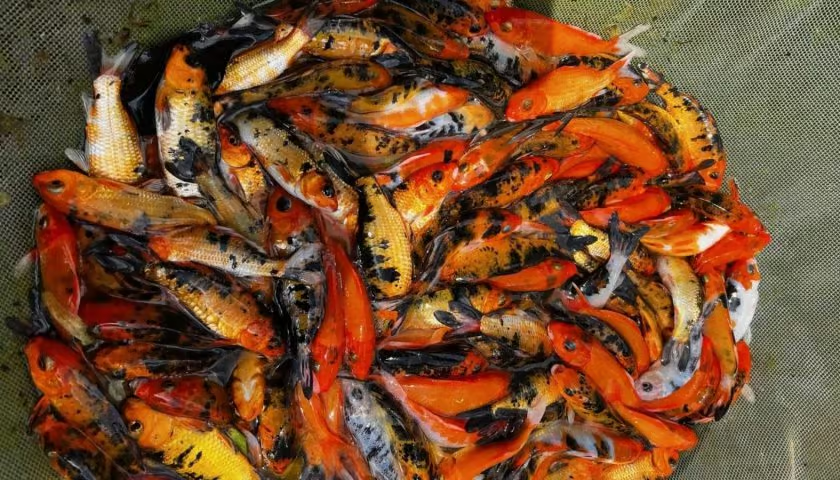
KENYA – Njuki-ini Fish Farm in Sagana, central Kenya, is targeting growth in the ornamental fish market after expanding its operations to produce around 100,000 fish annually, according to an interview published by The Fish Site.
The family-run farm was established by Pastor Charles Kariuki during the Covid-19 pandemic, when business disruptions and limited employment opportunities prompted him to explore fish farming.
He now operates the farm with his son, Kelvin Kariuki, who serves as farm manager, alongside other family members and employees.
The farm has 15 ponds and produces approximately 50,000 tilapia, 20,000 catfish and 30,000 ornamental fish each year.

Its ornamental fish production includes koi carp, goldfish, Black Moor and red carp, while the farm also supplies tilapia and catfish fingerlings to other producers.
According to Kariuki, ornamental fish have become the core commercial focus because of their faster growth and strong market demand.
“Ornamental fish form the core of our business,” Kariuki told The Fish Site, noting that they can mature within three to five months, compared with seven to eight months for tilapia and catfish.
The farm sources its feed locally from agro-vet shops, mainly using Unga Feeds for fish at different growth stages. It also breeds most of its ornamental fish on site.

Ornamental fish offer alternative market
Njuki-ini Fish Farm supplies customers across Kenya, including Nairobi, Mombasa, Kisumu, Nakuru and Eldoret.
Ornamental fish are sold mainly to aquarists, aquarium owners and pet shops, while tilapia and catfish are supplied to farmers and institutions.
Prices range from KSh100 (about US$0.77) to KSh1,000 (about US$7.75), depending on the species, size and type of fish.
The farm has also been experimenting with selective breeding to develop ornamental fish varieties suited to Kenyan conditions.
Its work includes improving colour patterns, growth, body shape and adaptability.
However, market access remains a challenge for the farm’s food-fish operations.
Kariuki said securing reliable and profitable markets for tilapia and catfish can be difficult when many farmers harvest at the same time.
Production costs, transportation and reliance on middlemen can further affect profitability.
The farm is therefore seeking to build more direct connections between producers and consumers, restaurants and institutions.
Kariuki also believes aquaculture could help Kenya address declining fish supplies from Lake Victoria.
“If well supported, fish farming can significantly increase fish production and help replace the declining supply from Lake Victoria,” he said, adding that farmers need training and reliable markets to expand production.
The farm has largely financed its growth through Kariuki’s own investment, with income reinvested into ponds, fish stocks and equipment.
Looking ahead, Njuki-ini Fish Farm aims to become one of the largest ornamental fish farms in Kenya and East Africa.
The family also plans to establish an on-site eatery where customers can select and have tilapia or catfish prepared, creating an additional market for the farm’s production.
Sign up HERE to receive our email newsletters with the latest news updates and insights from Africa and the World, and follow us on our WhatsApp channel for updates.


Be the first to leave a comment