

Heifer calls for finance reforms to unlock livestock and feed value chain growth in Africa
The summit also marked the official launch of the Agricultural Finance Technical Working Group (AFTWG).
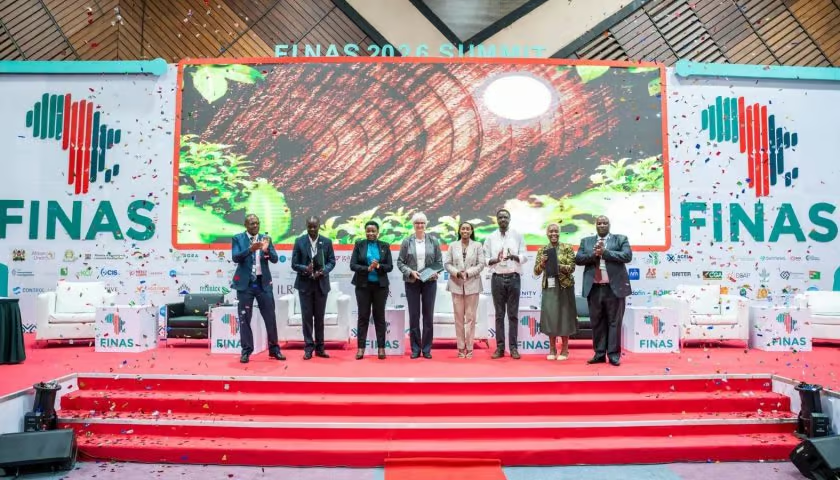
KENYA – Heifer International has called for financial systems that better support livestock producers, feed businesses and agribusinesses, arguing that conventional lending models continue to limit investment across Africa’s food and feed value chains.
The organisation made the appeal during the Financing Agri-Food Systems Sustainably (FINAS) Summit 2026, held in Nairobi under the theme Towards Sustainable Financial Architecture for Africa’s Food Systems.
The summit brought together governments, financial institutions, development organisations and private-sector players to explore strategies for mobilising sustainable investment in African agriculture.
Speaking during the event, Wairimu Munyinyi-Wahome, Country Director of Heifer International Kenya, said agricultural finance must be redesigned to reflect the realities of farming rather than forcing producers to conform to conventional banking models.
“For too long, we have asked whether farmers are bankable. The better question is whether our financial systems were ever designed around the realities of agriculture,” she said.
Heifer argued that access to finance alone will not transform agriculture unless lending products are aligned with production cycles, market opportunities, enterprise capability and risk-sharing mechanisms that reflect the seasonal nature of farming.
The organisation highlighted its work with partners through the Kenya Capital for Agri-Investment Platform (KCAP), which seeks to strengthen enterprise readiness, improve market access and reduce investment risks for agricultural businesses.
The summit also marked the launch of the Agricultural Finance Technical Working Group (AFTWG), chaired by the Kenya Bankers Association and supported by GIZ.
The platform will bring together financial institutions, policymakers and development partners to strengthen agricultural finance through evidence-based policy reforms and improved regulatory frameworks.
Smarter finance critical for feed and livestock productivity
Heifer said financing models must also support the growth of Africa’s livestock and feed sectors, where access to working capital remains a major constraint for farmers, cooperatives and agribusinesses.
Feed accounts for the largest share of livestock production costs, making affordable financing essential for purchasing quality feed, improving herd productivity and supporting investment in commercial feed production.
Limited access to credit often forces smallholder livestock farmers to rely on lower-quality feed resources, reducing animal performance and profitability.
During one of the summit sessions, Sarah Gicheru, Head of Finance at VunaPay, said financial products should reflect the cash-flow patterns of agricultural enterprises rather than conventional repayment schedules.
“We have to keep the farmer at the centre of innovation. Finance should work with agricultural cash flows and reduce the friction farmers face when accessing working capital and making repayments,” she said.
Heifer also emphasised the importance of combining finance with business development support, digital farmer identities, market linkages and technical skills to improve the creditworthiness of smallholder farmers and rural enterprises.
The organisation noted that stronger financing models could accelerate investment across livestock, feed manufacturing and agricultural processing while helping businesses respond to growing demand for animal protein across Africa.
According to Heifer, building resilient food and feed value chains will require closer collaboration between governments, financial institutions, agribusinesses and development partners to create lending systems that recognise agriculture’s unique risks while supporting long-term commercial growth.
Sign up HERE to receive our email newsletters with the latest news updates and insights from Africa and the World, and follow us on our WhatsApp channel for updates.

Be the first to leave a comment