
GOVT. POLICY & REGULATORY
-

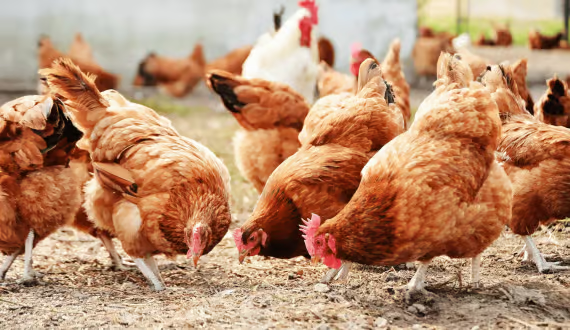
Oman bans poultry imports from Iran, the Netherlands, and Italy
Authorities explained that the import restrictions will remain in place until the conditions prompting the ban are resolved and an official announcement is made to lift them.
-

Uganda introduces Jianzhou Big Ear goats from China to boost livestock productivity
Officials hopes that the Jianzhou Big Ear goats could lay the groundwork for improved meat production, stronger rural livelihoods, and a more resilient livestock sector.
-
Chicken prices keep rising across Egypt as feed, transport costs surge
Rising fuel and logistics costs have inflated distribution expenses, while seasonal demand and limited supply are worsening the situation.
-
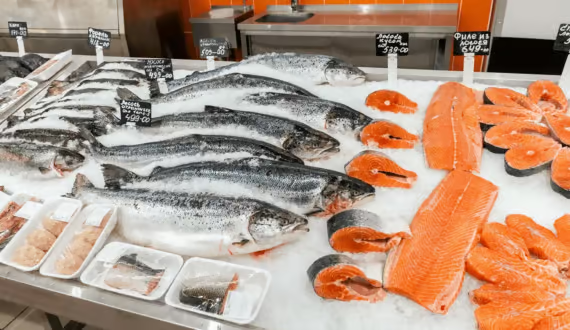
Morocco signs new fisheries cooperation agreement with Russia
The four-year deal outlines fishing rights, catch limits, and ecosystem protection measures in Moroccan waters.
-
Nigeria’s livestock ministry introduces special vehicles for safer animal transport
The vehicles are expected to reduce disease risks, improve hygiene standards, and streamline livestock movement nationwide.
-
Niger to establish a national center to improve animal production
The new center will focus on enhancing local breeds to increase milk and meat yields and reduce import dependence.
-
71,000 chickens to be culled after bird flu outbreak in the Netherlands
The case underscores how avian flu remains a persistent threat to animal health and trade stability.
-
FDA grants first conditional approval for drug to combat New World Screwworm in cattle
With this conditional approval, cattle producers now have an immediate line of defense against a parasite that poses a serious threat to animal health and agricultural livelihoods.
-
Bangladesh moves to revamp fisheries policy with chemical-free fish goal
Government officials say the new policy will prioritise stricter monitoring of hatcheries, prohibit low-quality feed, and strengthen laboratory testing to ensure food safety.
-
Côte d’Ivoire inks MOU for livestock traceability system
The goal is to transform livestock health management into a more preventive and responsive system that can reduce economic losses.