

Sri Lanka’s poultry sector feels the squeeze as maize trade controls drive up feed costs

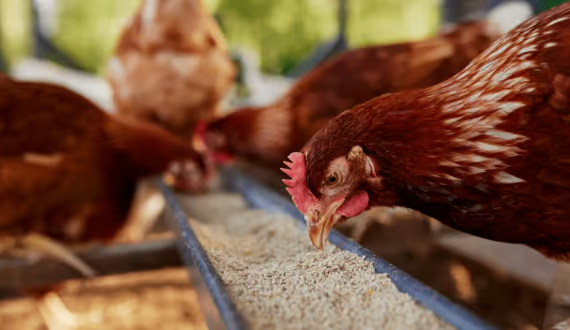
SRI LANKA – Sri Lanka is grappling with an escalating poultry feed crisis driven by high maize prices and restrictive trade policies, which are inflating the costs of eggs and meat in a country already burdened by child malnutrition.
The government has imposed a 25-rupee per kilogram import tax on maize (equivalent to roughly US$86 per tonne) and set quantity limits through a licensing system, which has often been criticised for concentrating price control in the hands of a few major license holders.
This “maize mafia,” as some call it, benefits disproportionately from the high tariffs and limited import options, making feed production costly, especially for small and medium-sized poultry farmers.
Despite permits being issued for the import of 300,000 tonnes of maize to ease supply following a lower-than-expected harvest in the Yala season, maize prices remain steep, putting pressure on feed production costs.
Currently, the import price for maize hovers around 110 rupees (US$376 per tonne), but local sellers charge as much as 160 rupees (US$547 per tonne).
For comparison, Pakistan, one of the closest and most affordable maize suppliers for Sri Lanka, offers maize at around 75 rupees per kilo (US$255 per tonne).
However, due to sudden demand from Sri Lanka’s limited import windows, prices in Pakistan have surged, further complicating efforts to secure affordable feed.
Minister Vijitha Herath has pledged to support small farmers by facilitating connections with importers to secure cheaper feed alternatives, such as wheat.
The government’s Food Policy Committee is also poised to intervene to stabilise maize prices, but Sri Lanka’s prevailing “import substitution” approach is proving to be a double-edged sword.
While this self-sufficiency model aims to shield local farmers, it limits access to global supply chains and raises food costs. As a result, protein-rich foods remain inaccessible for many families, undermining public health and economic growth.
Comparatively, Vietnam, which abandoned its self-sufficiency strategy during its 1980s Doi Moi economic reforms, is now a food-exporting powerhouse linked to global supply chains.
In 2024 alone, Vietnam is expected to import around 11 million tonnes of maize, mostly for aquafeed, while it exports substantial quantities of seafood and poultry products across Asia.
The economic and nutritional benefits have been profound; over the last decade, the average height of Vietnamese children increased by 3.7 centimetres.
Aligning feed policies with global market standards could be key to reducing prices, enhancing nutrition, and strengthening Sri Lanka’s poultry sector’s competitiveness.
Sign up to receive our email newsletters with the latest news updates and insights from Africa and the World HERE.
Be the first to leave a comment