

World leaders make landmark commitment to combat antimicrobial resistance
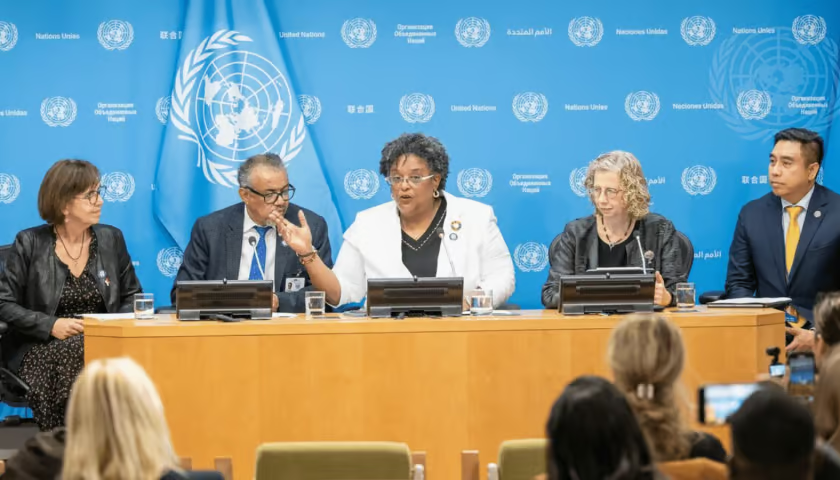
GLOBAL – World leaders pledged decisive action against the growing antimicrobial resistance (AMR) threat at the recently concluded 79th United Nations General Assembly (UNGA).
The High-Level Meeting on AMR concluded with the approval of a political declaration that sets ambitious targets to curb the devastating effects of AMR, including a 10% reduction in the estimated 4.95 million annual deaths linked to bacterial resistance by 2030.
The declaration marks a unified global response to one of our time’s most pressing health challenges.
The Food and Agriculture Organization (FAO), the World Health Organization (WHO), the World Organisation for Animal Health (WOAH), and the United Nations Environment Programme (UNEP), collectively known as the Quadripartite, hailed the agreement.
These organizations emphasized the importance of a One Health approach, which integrates the health of humans, animals, plants, and ecosystems in the fight against AMR.
The declaration calls for significant financial commitments, including US$100 million in catalytic funding to support national action plans on AMR.
A target of at least 60% of countries having fully funded national strategies by 2030 has been set, underscoring the need for global cooperation to mobilise resources through diverse funding sources.
On the human health front, the declaration aims to ensure that 70% of antibiotics used worldwide belong to the WHO Access group, which includes drugs that are essential yet pose minimal risks in terms of fostering resistance.
Additionally, by 2030, all countries must meet WHO’s minimum requirements for infection prevention and control (IPC) programs, including universal access to sanitation and hygiene in healthcare facilities.
The declaration pledges a substantial reduction in the use of antimicrobials by 2030 in the agricultural and animal health sectors.
This goal will be achieved through the implementation of evidence-based practices such as biosecurity measures, vaccination strategies, and responsible use of antimicrobials.
These commitments align with the FAO’s RENOFARM initiative and WOAH’s priority disease guidelines.
The leaders further agreed to address the environmental impact of AMR, particularly by curbing the discharge of antimicrobials into ecosystems and boosting research on the environmental drivers of resistance.
This political declaration is significant because it acknowledges the multisectoral nature of AMR, which demands coordinated efforts across human, animal, agricultural, and environmental sectors.
FAO Director-General QU Dongyu reiterated the importance of sustainable, resilient agrifood systems in preventing the spread of resistance.
“Our health depends on safe, nutritious food, and food security hinges on healthy agrifood systems,” he said.
UNEP’s Executive Director Inger Andersen also highlighted the critical role of environmental stewardship, pointing out that the environment plays a major role in the transmission of resistant pathogens.
WHO Director-General Dr. Tedros Adhanom Ghebreyesus stressed the urgency of preventing AMR from undoing decades of medical progress.
The declaration formalizes the role of the Quadripartite Joint Secretariat as the coordinating body for global AMR efforts and mandates an update of the Global Action Plan by 2026.
As countries gear up to report on progress, the global fight against AMR enters a new era of collective action, with the potential to save millions of lives and safeguard public health for future generations.
Sign up to receive our email newsletters with the latest news updates and insights from Africa and the World HERE.

Be the first to leave a comment