

FAO vaccinates over 106,000 livestock in South Sudan
This vaccination campaign shows a growing momentum in African nations as they step up disease control efforts.
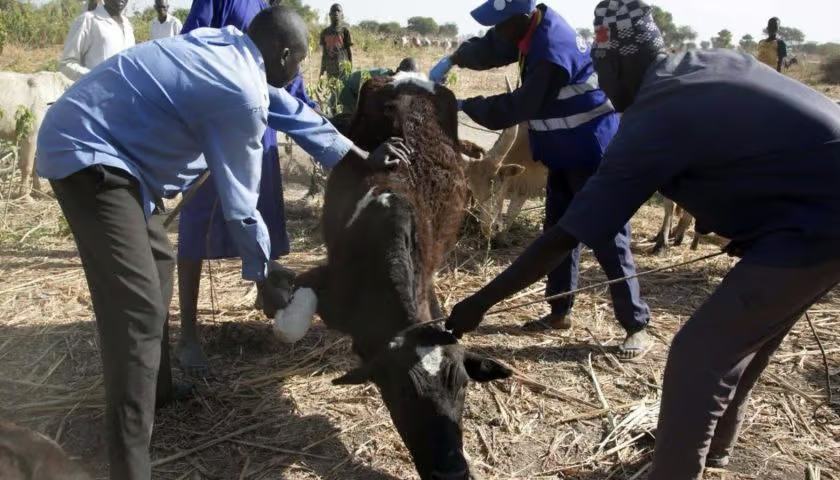
SOUTH SUDAN – More than 106,000 cattle, goats, and sheep have been vaccinated in Twic East and Bor counties of Jonglei State this month as the United Nations Food and Agriculture Organization (FAO) intensifies efforts to protect returning livestock from disease outbreaks and strengthen food security in one of South Sudan’s most livestock-dependent regions.
The campaign comes as herders return their animals to Jonglei after years of displacement caused by devastating floods and recurring livestock disease outbreaks that forced many cattle keepers to migrate to Eastern Equatoria State in search of safer grazing areas.
FAO said the vaccination programme is designed to protect livestock against major endemic diseases, improve animal health, and support the livelihoods of communities that rely heavily on livestock production for food and income.
“Our goal is to ensure livestock productivity, connect communities to veterinary services, and safeguard food security,” said Simon Nyoap, FAO Bor Field Focal Point.
“Healthy livestock are the backbone of rural livelihoods. By preventing disease outbreaks, we are helping families protect their assets, improve nutrition, and build resilience against future shocks.”
Livestock production remains a critical pillar of South Sudan’s rural economy, with cattle serving as a source of income, nutrition, social status and resilience during periods of economic and climate-related stress.
Local authorities and livestock owners welcomed the intervention, noting that the return of cattle to Jonglei presents an opportunity to rebuild herds and revive economic activities disrupted by years of flooding and displacement.
“The vaccination gives us confidence that our animals will remain healthy as they return home,” said a livestock owner in Twic East County.
“Strong and healthy cattle mean better livelihoods for our families.”
FAO said the campaign forms part of broader efforts to strengthen veterinary services, improve disease surveillance systems and support sustainable livestock production in flood-affected communities.
Livestock vaccination gains momentum across Africa
The South Sudan initiative reflects a wider trend across Africa, where governments and development partners are increasing investments in vaccination programmes to control livestock diseases, improve productivity and protect regional trade.
Earlier this year, Uganda launched a nationwide foot-and-mouth disease (FMD) vaccination campaign targeting 45.5 million livestock as authorities sought to curb outbreaks that continue to affect cattle production and market access.
Uganda has also introduced an anti-tick vaccine aimed at reducing losses caused by ticks and tick-borne diseases, which remain a major constraint to livestock productivity across East Africa.
In Kenya, authorities recently launched a seven-day livestock vaccination campaign in Wajir County as part of broader regional efforts to strengthen disease prevention in pastoral production systems.
Meanwhile, a South African court ruling cleared the way for private-sector procurement of FMD vaccines, a move expected to improve vaccine availability and strengthen disease control measures in one of Africa’s largest livestock industries.
As African countries seek to improve livestock productivity and resilience, vaccination is increasingly being viewed as one of the most cost-effective tools for reducing disease losses, improving animal welfare and supporting food security for growing populations.
Sign up HERE to receive our email newsletters with the latest news updates and insights from Africa and the World, and follow us on our WhatsApp channel for updates.

Be the first to leave a comment