

SEAFDEC opens new hatcheries to strengthen shrimp, prawn and crab production
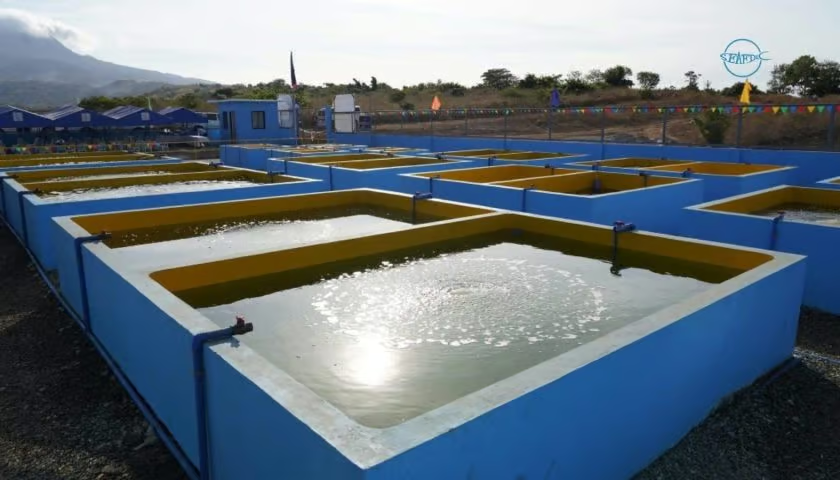
PHILIPPINES – The Southeast Asian Fisheries Development Center Aquaculture Department (SEAFDEC/AQD) has inaugurated three new hatchery facilities in the Philippines to boost shrimp, freshwater prawn and mud crab seed production, strengthening aquaculture research, innovation and food security across Southeast Asia.
The facilities, located at SEAFDEC/AQD’s Tigbauan headquarters in Iloilo, include a whiteleg shrimp hatchery and grow-out facility, a giant freshwater prawn hatchery, and a mangrove crab hatchery.
Together, they are expected to increase the supply of high-quality seed stock while supporting research, technology transfer and industry training.
The hatcheries were officially opened during SEAFDEC/AQD’s 53rd anniversary, marking another milestone in the centre’s efforts to modernise aquaculture production in the region.
Agriculture Undersecretary for Fisheries Drusila Esther Bayate, who also serves as the Philippines’ Council Director to SEAFDEC, described the new infrastructure as a strategic investment in the country’s aquaculture future.
“More than new facilities, they are strategic investments in the future of Philippine aquaculture,” Bayate said.
She noted that the hatcheries will serve as centres for research into breeding technologies, aquatic animal health, disease prevention, and biosecurity, while also providing practical training for hatchery operators, fish farmers, researchers, students, extension officers, and local government personnel.
The Department of Agriculture, through the Bureau of Fisheries and Aquatic Resources (BFAR) and the National Fisheries Research and Development Institute, will continue collaborating with SEAFDEC to accelerate the adoption of science-based aquaculture technologies.
New hatcheries target regional aquaculture growth
According to SEAFDEC/AQD Chief Dan Baliao, the new whiteleg shrimp facility has been designed to produce 18 million Litopenaeus vannamei postlarvae annually, with six large circular tanks capable of generating approximately 36 metric tonnes of shrimp each year.
The giant freshwater prawn hatchery will produce 2.4 million postlarvae annually, helping address the country’s limited supply of seed stock for the native ulang species.
“We want to increase the production of ulang because it is a promising commodity native to our country. However, we do not have a consistent supply of seed stock,” Baliao said.
“We hope this new facility, which is projected to produce 2.4 million postlarvae annually, will help increase the country’s overall production.”
Meanwhile, the mangrove crab hatchery is expected to produce 1.5 million crab instars annually, supporting one of the region’s most valuable aquaculture commodities.
Since April, SEAFDEC/AQD has completed or rehabilitated nine research and production facilities, reflecting continued investment in strengthening regional aquaculture capacity.
The centre invested approximately PHP50 million (US$870,000) in the whiteleg shrimp hatchery, PHP12 million (US$209,000) in the giant freshwater prawn hatchery and PHP25 million (US$435,000) in the mangrove crab hatchery.
“Constructing these facilities required significant investment, but if this is what is needed to stimulate aquaculture development in the country and across Southeast Asia, then it is money well spent,” Baliao said.
He added that SEAFDEC/AQD will continue investing in infrastructure to improve sustainable aquaculture production and strengthen regional food security.
Sign up HERE to receive our email newsletters with the latest news updates and insights from Africa and the World, and follow us on our WhatsApp channel for updates

Be the first to leave a comment