

AFMA moves to modernise feed assurance systems as traceability demands grow
The association developed a Code of Conduct to promote self-regulation in the feed industry in South Africa.
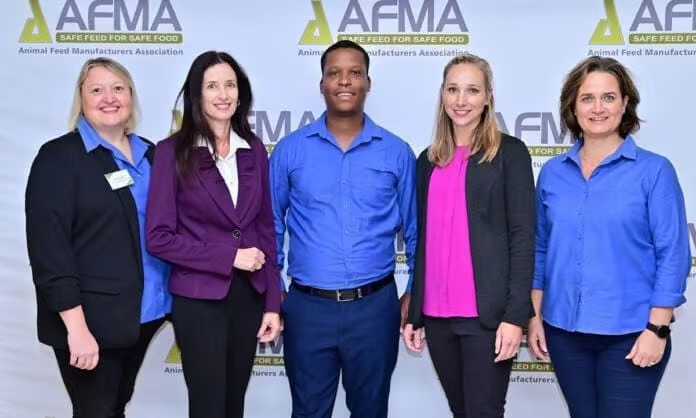
SOUTH AFRICA – The Animal Feed Manufacturers Association (AFMA) is reviewing and strengthening its Code of Conduct framework to support more advanced traceability, digital auditing and risk-based compliance systems, as growing consumer expectations and increasingly integrated food supply chains place greater demands on feed safety and accountability.
The initiative was highlighted during an AFMA information day, where industry leaders emphasised the critical role animal feed plays in protecting food safety, supporting livestock production and maintaining consumer confidence throughout the food value chain.
AFMA Executive Director Liesl Breytenbach said the distinction between feed and food supply chains has become increasingly blurred, making stronger assurance systems essential for ensuring food security and product integrity.
“Long gone are the days of separate feed and food chains. These chains are becoming increasingly interconnected,” Breytenbach said.
She noted that South Africa’s formal animal feed industry operates under one of the country’s most prescriptive agricultural regulatory frameworks through the Fertilisers, Farm Feeds, Agricultural Remedies and Stock Remedies Act (Act No. 36 of 1947).
According to Breytenbach, feed ingredients, additives, formulations, manufacturing processes and traceability systems are extensively regulated before products reach the market, with requirements centred on animal health, feed and food safety, traceability, accountability and integrity.
“Our AFMA Code of Conduct logo represents trust, safety and integrity, and when our members use this logo on their products, it automatically confirms that they also subscribe to our standards,” she said.
Industry shifts toward technology-enabled assurance
AFMA’s Code of Conduct has been mandatory for members for more than 15 years and focuses on responsible manufacturing practices, feed safety, traceability, legal compliance, accountability and independent assurance.
However, Breytenbach said evolving market conditions require assurance systems to adapt beyond traditional compliance approaches.
AFMA is therefore reviewing its existing framework to support a more practical and technology-enabled audit environment, including electronic audit systems, enhanced reporting capabilities and stronger traceability mechanisms.
“We need to look at modern industry assurances to strengthen feed safety, regulatory efficiency and food security,” she said.
“Operating in a dynamic animal feed industry, we would like to act as a thought leader influencing food security through partnerships with all stakeholders in the protein value chain.”
The review comes as feed manufacturers face increasing pressure from consumers, retailers and regulators for greater transparency throughout agricultural supply chains.
According to AFMA, key drivers behind the modernisation effort include increasing traceability requirements, growing consumer interest in food safety and the integration of feed and food value chains.
Breytenbach stressed that future assurance systems must move beyond minimum compliance requirements and adopt a more preventative approach.
“There will always be something new and challenging, so feed and food assurance systems must also continue to evolve to ensure these challenges are addressed appropriately,” she said.
Risk-based compliance gains momentum
The shift toward modern assurance systems was further reinforced by Thea Laufs, Managing Director of LTL Group of Companies.
She highlighted the growing adoption of integrated, risk-based and technology-enabled compliance models across the agriculture sector.
Laufs noted that effective assurance systems can improve regulatory efficiency while maintaining high standards of feed safety and transparency.
She also warned that lengthy pre-market approval processes can hinder innovation, competitiveness and supply continuity in highly regulated industries.
“Strong industry assurance frameworks provide an opportunity to support regulatory efficiency without compromising feed safety, transparency or accountability,” Laufs said.
AFMA also identified on-farm feed mixing as an area requiring closer industry cooperation to ensure all feed entering livestock production systems meets established safety and quality requirements.
The association believes stronger collaboration across the grain, feed, livestock and food industries will be essential to maintaining consumer trust and strengthening food security as supply chains become increasingly interconnected.
Sign up HERE to receive our email newsletters with the latest news updates and insights from Africa and the World, and follow us on our WhatsApp channel for updates.

Be the first to leave a comment