

Amino acids emerge as key drivers of appetite control in young chicks
According to the review, short-term refeeding causes rapid increases in several free amino acids in the brain, suggesting they serve as fast-acting satiety signals.
JAPAN – A groundbreaking review published in the Journal of Poultry Science is shedding new light on one of the poultry industry’s most persistent questions: what controls appetite in newly hatched chicks?
The article, authored by Dr. Phuong V. Tran of Kyushu University’s Graduate School of Bioresource and Bioenvironmental Science, examines how amino acids and their metabolites help regulate food intake during the earliest stages of development.
The review, titled “Function of Amino Acids and Neuropeptides in Feeding Behaviour in Chicks”, was released on March 15, 2025, in Volume 62 of the journal.
It compiles decades of research into the biological mechanisms driving appetite and satiety, critical factors that influence chick growth, health, and long-term productivity.
While neuropeptides have long been considered central to appetite regulation, their relatively slow action suggested another, faster signal was at work. Dr. Tran’s analysis points to free amino acids as likely candidates.
Key findings on amino acids and satiety
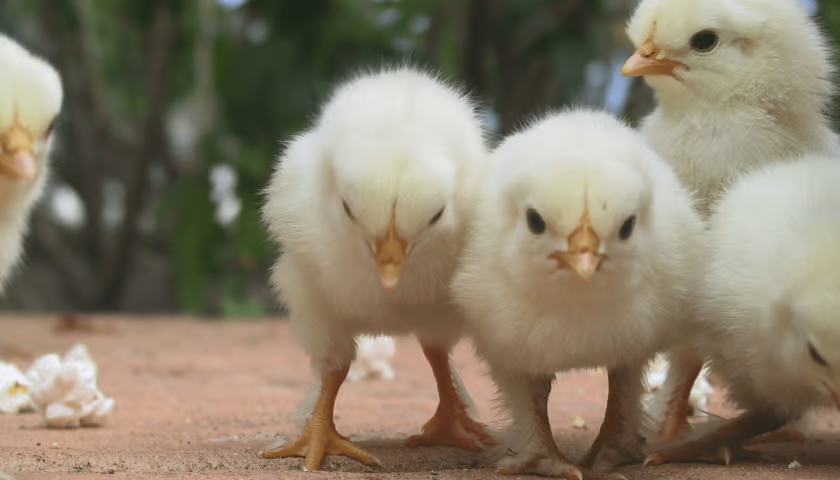
Neonatal chicks, which begin searching for food immediately after hatching, have unusually frequent and brief feeding bouts.
According to the review, short-term refeeding causes rapid increases in several free amino acids in the brain, suggesting they serve as fast-acting satiety signals.
One metabolite in particular, L-ornithine, derived from L-arginine, was found to suppress food intake in a dose-dependent manner and without triggering stress-related pathways.
The study also highlights a notable interaction between L-ornithine and neuropeptide Y (NPY), a powerful appetite stimulator. When both substances were administered together, NPY’s effect was sharply reduced.
“This implies a potent interaction in the brain between the regulation of food intake by NPY and acute satiety signals by L-ornithine,” Dr. Tran notes.
The findings suggest that L-ornithine serves as a rapid “braking” mechanism on NPY-driven appetite, helping explain the chick’s naturally frequent feeding cycles.
Other amino acids, such as L-tryptophan and L-proline, were also examined, with their impacts on feeding often linked to sedation and sleep, common behaviours following meals in neonatal chicks.
Implications for poultry nutrition and beyond
Dr Tran emphasises that the research carries significant practical value for poultry producers.
“Knowledge of the key role played by amino acids in the overall network of the central nervous system in neonatal chicks can be used to adjust dietary amino acids for optimal performance in poultry production,” she explains.
By fine-tuning amino acid balance in chick diets, producers could improve early growth and strengthen flock health.
The review also underscores the broader scientific importance of this work. Because neonatal chicks serve as a uniquely accessible model for studying appetite regulation, insights gained from them could inform research in mammals as well.
Sign up HERE to receive our email newsletters with the latest news updates and insights from Africa and the World, and follow us on our WhatsApp channel for updates.


Be the first to leave a comment