

Poultry farmers in Kenya’s Machakos County protest new transport levy, warn of sector collapse
Poultry diseases such as Newcastle and avian influenza spread easily when bird movement is unregulated, and the new levy will support monitoring and inspection programs.
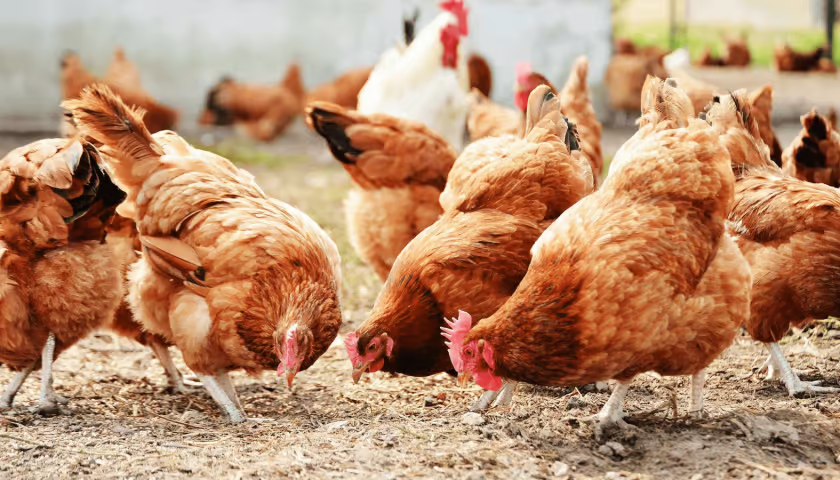
KENYA – Poultry farmers in Machakos County, Kenya, are protesting a new county-imposed levy requiring them to pay US$0.13 (KSh 20) for each chicken transported out of the region.
The fee, introduced under the Machakos County Finance Act, has triggered widespread discontent among farmers who say it threatens to cripple one of the county’s most vital economic activities.
Machakos has long been a key supplier of chicken to Nairobi, Kitui, Kajiado, Makueni, and other neighboring markets, making the levy a concern beyond the county’s borders.
Producers argue that the charge comes at a difficult time, as they are already dealing with high feed costs, rising input taxes, expensive veterinary drugs, and falling farmgate prices due to cheaper imported chicken.
For instance, a farmer transporting 200 birds to Nairobi now faces an additional US$26 (about KSh 4,000) in costs, a figure many say will either push them out of business or force them to increase retail prices.
This situation, they add, could lead to reduced demand from consumers, shrinking profit margins, and ultimately a decline in production.

Poultry farming provides essential income for many rural families in Machakos, helping to cover school fees, medical bills, rent, and household expenses.
Farmers argue that instead of offering financial relief, the county government has introduced measures that make survival in the business even harder.
However, officials from the Machakos County Government have defended the levy, saying it aims to enhance disease control and fund animal health services rather than exploit farmers.
They explained that poultry diseases such as Newcastle and avian influenza spread easily when bird movement is unregulated, and the fee will support monitoring and inspection programs.
Even so, farmers insist that they were never consulted before the implementation, and they question whether disease control is truly the motive behind the policy.
Many argue that if public health is the concern, the government should provide free vaccinations, subsidized feeds, and farmer training instead of new charges.
The Kenya Poultry Breeders Association has since urged Governor Wavinya Ndeti to suspend the levy and open discussions with affected producers.
Some farmers have threatened peaceful demonstrations, while others warn they might stop transporting birds altogether if the fee remains in place.
Experts caution that failure to resolve the standoff could trigger wider market disruptions, as Nairobi and other urban centers rely heavily on Machakos for poultry supplies.

A shortage could drive up prices, reduce food availability, and affect jobs along the entire value chain, from transporters and feed dealers to vendors and restaurants.
Farmers are calling on both county and national governments to adopt policies that support rather than penalize agricultural producers.
Sign up HERE to receive our email newsletters with the latest news updates and insights from Africa and the World, and follow us on our WhatsApp channel for updates.


Be the first to leave a comment