

2.16M poultry lost from avian influenza in May 2026, WOAH reports
H5N1 remained the dominant strain as new outbreaks were reported across seven countries.
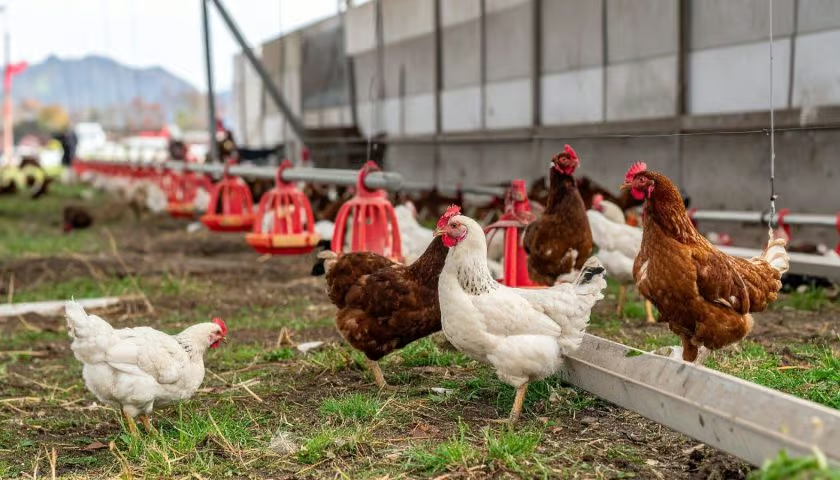
WORLD – The World Organisation for Animal Health (WOAH) reported that outbreaks of Highly Pathogenic Avian Influenza (HPAI) resulted in the death or culling of about 2.16 million poultry birds worldwide during May 2026, with Europe accounting for almost 1.99 million of the losses.
According to WOAH’s Situation Report 83, released in late June 2026, 51 new poultry outbreaks were confirmed across Canada, France, Nepal, the Netherlands, Poland, Senegal and the United States.
Europe recorded 33 of the reported outbreaks as infections continued to affect both commercial and backyard poultry flocks, particularly in France, the Netherlands and Poland.
WOAH said the H5N1 clade 2.3.4.4b of the Eurasian lineage remained the dominant virus strain, citing its high transmission rate and continued spread from wild birds into domestic poultry populations.
The organisation said the latest figures reflect the current HPAI epidemic, which began in October 2025 and peaked in November before gradually declining across the Northern Hemisphere in line with seasonal wild bird migration.
Despite this downward trend, WOAH reported that more than 7,000 outbreaks had been detected in wild birds globally during the current season, exceeding levels recorded in previous years and creating an ongoing source of infection for poultry farms.
Mammal infections continue
In addition to poultry, the disease was also detected in several wild mammals during May, including a red fox, a polar bear and a walrus, reflecting the virus’s continued spread beyond bird populations.
WOAH called for a One Health approach to disease management, recommending stronger surveillance, improved farm biosecurity, timely reporting of outbreaks and wider use of genetic sequencing to monitor virus evolution.
The report also noted that Argentina, Hungary, Bolivia and a disease control zone in Northern Ireland regained HPAI-free status for poultry during May after meeting international disease control requirements.
The organisation said continued outbreaks are placing pressure on the poultry sector through large-scale culling, disruptions to poultry and egg supplies, higher market prices and increased costs associated with compensation and flock replacement.
WOAH estimated that more than 633 million poultry birds have been lost globally to HPAI since 2005, with the largest epidemic waves occurring after 2020 and affecting biodiversity, international trade and food security.
Although the organisation said the risk to the general public remains low, it warned that sporadic human infections linked to direct exposure to infected animals continue to be reported, reinforcing the need for continued monitoring and international cooperation.
Sign up HERE to receive our email newsletters with the latest news updates and insights from Africa and the World, and follow us on our WhatsApp channel for updates.


Be the first to leave a comment