

Zambia plans community hatcheries to strengthen fingerling supply for fish farmers
The hatcheries aim to increase the supply of fingerlings to local fish farmers.
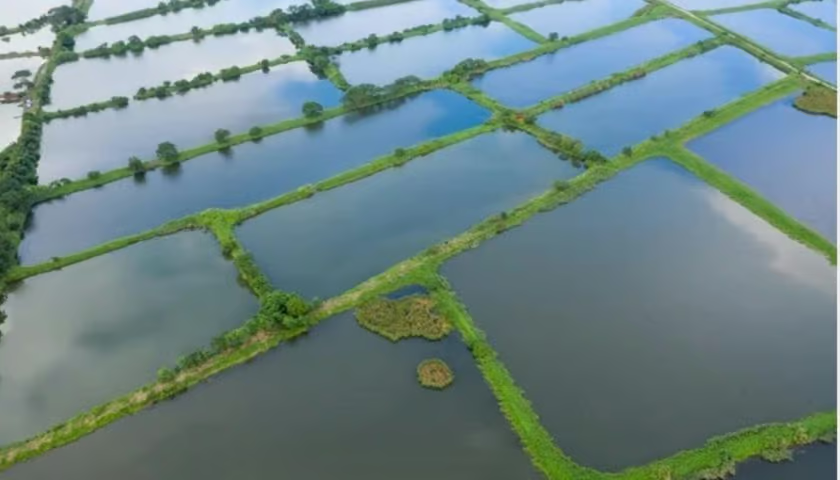
ZAMBIA – Kaputa District in Zambia’s Northern Province plans to establish two community fish hatcheries to improve the supply of fingerlings, support the expansion of aquaculture and reduce pressure on capture fisheries.
The hatcheries, to be developed by the Ministry of Fisheries and Livestock, are expected to supply high-quality fingerlings to local fish farmers as demand for aquaculture continues to grow across the district.
Kaputa District Fisheries Coordinator Boniface Nyika said the project was driven by growing interest in fish farming, with several farmers already preparing ponds in anticipation of expanding production.
“We have identified some fish farmers in here as well as the Kasepa area that have already started preparing their fish ponds. These are among many farmers who we feel that the hatchery constructed will help to supply fingerlings,” Nyika said.
The initiative is expected to improve access to fingerlings, which remains one of the biggest constraints facing fish farmers in the district.
Currently, most producers source fingerlings from the Misamfu Research Centre in Kasama, about 400 kilometres away, increasing transport costs and limiting the growth of aquaculture.
Nyika encouraged more fishers to diversify into fish farming, noting that aquaculture offers an alternative source of income during Zambia’s annual fishing ban and helps improve fish availability.
“Selling fish harvested from ponds during the fishing ban presents a good business opportunity for farmers,” he said.
Hatcheries could support aquaculture growth
Reliable access to fingerlings is widely recognised as a key requirement for expanding aquaculture production.
Community hatcheries can shorten supply chains, reduce transport losses and encourage more farmers to invest in fish production.
The planned facilities are expected to support the district’s efforts to increase fish production while creating new income opportunities for rural households.
Local fish farmer Gerald Chipayeni welcomed the project, saying the long distance to existing hatcheries discourages many farmers from entering the sector.
“We only get our fingerlings from Misamfu Research Centre in Kasama which is about 400 kilometres from here. It is very far. When you think of the distance, you are already discouraged,” Chipayeni said.
He added that expanding aquaculture could also improve compliance with the annual fishing ban by providing farmers with an alternative source of fish and income.
Illegal fishing remains a challenge
Alongside promoting aquaculture, the Department of Fisheries continues to address illegal fishing on Lake Mweru Wantipa.
Nyika said the department has issued more than 300 fishing licences this year but expressed concern over the continued use of illegal fishing gear, particularly mosquito nets, which threaten fish stocks.
“We have so far issued more than 300 fishing licences. However, the use of illegal fishing gear remains a major challenge on Lake Mweru Wantipa. Most of our fishermen use mosquito nets. This is a challenge as we are just depleting the fish in the lake,” he said.
He also noted that limited staffing has made it difficult to patrol the lake effectively, which supports more than 3,000 fishers, and urged fishing communities to comply with fisheries regulations and use approved fishing gear to help conserve fish stocks for future generations.
Sign up HERE to receive our email newsletters with the latest news updates and insights from Africa and the World, and follow us on our WhatsApp channel for updates.


Be the first to leave a comment