

World Bank approves US$60M to boost Congo’s poultry and aquaculture sectors
The initiative will seek to expand access to finance for farmers and private investors while mobilising additional private capital for productive investments.
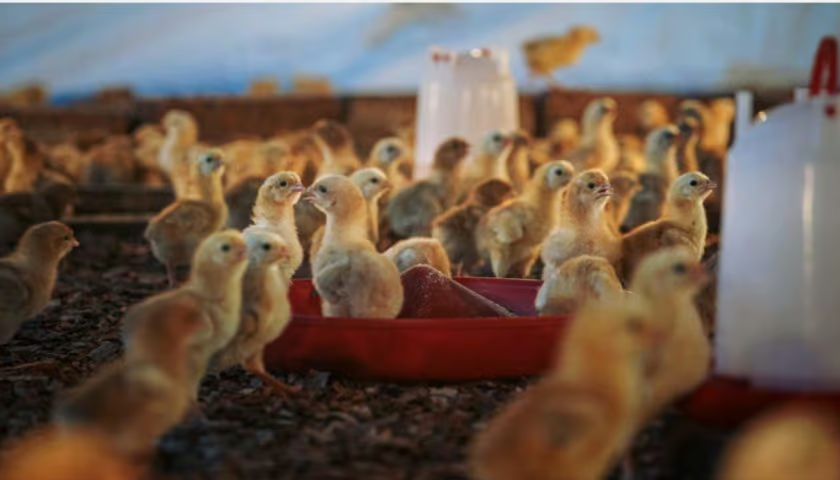
CONGO – The World Bank Group (WBG) has approved US$60 million to strengthen the Republic of Congo’s poultry and aquaculture value chains, aiming to boost domestic food production, create jobs and improve food security through investments in climate-resilient agriculture and private-sector development.
The financing will support the development of more competitive and climate-resilient poultry and aquaculture sectors by improving access to essential production inputs, including animal feed, fingerlings and day-old chicks, while expanding technical skills, infrastructure and investment opportunities across the two industries.
According to the WBG, the project will focus on selected Protected Agricultural Zones, where investments in productive infrastructure and capacity building are expected to improve efficiency and strengthen local value chains.
World Bank Division Director for the Republic of Congo, Cheick F Kanté, said the initiative recognises the important role poultry and aquaculture can play in diversifying the country’s economy while addressing growing demand for affordable sources of animal protein.

“Unlocking the potential of poultry and aquaculture can help Congo create more jobs, improve food and nutrition security, and build a more diversified and resilient economy,” Kanté said.
He added that the programme combines public investment, private-sector participation, skills development and climate-smart interventions to help local producers expand their operations and become more competitive.
“This project brings together public investment, private sector engagement, skills development, and climate-smart solutions to help local producers compete and grow,” he said.
The project also includes investments in climate-resilient infrastructure designed to strengthen production systems and reduce vulnerability to climate-related disruptions, an increasingly important priority as African agriculture faces more frequent extreme weather events.

Project targets feed supply and private investment
A major component of the initiative is improving the availability of quality agricultural inputs, particularly animal feed, which remains one of the largest production costs for poultry and aquaculture farmers across Africa.
The World Bank said reforms will also be introduced to strengthen the policy and regulatory environment, encouraging greater private-sector participation in both industries while improving access to finance for producers and investors.
By mobilising additional private capital, the project aims to stimulate investment throughout the poultry and aquaculture value chains, from production and processing to distribution and related services.
Strengthening domestic production is expected to reduce Congo’s dependence on imported food products while increasing the availability of nutritious animal protein for consumers.
The programme is also projected to create employment opportunities for farmers, processors, traders, entrepreneurs and agricultural service providers, with women and young people receiving targeted support through improved access to productive assets, technical training, finance and business opportunities.
The World Bank said connecting public investment with private-sector participation will help build commercially sustainable poultry and aquaculture businesses while strengthening local agricultural value chains and supporting broader economic diversification.
The initiative forms part of wider efforts to improve food and nutrition security in the Republic of Congo by expanding domestic livestock and aquaculture production and increasing the resilience of the country’s agricultural sector.
Sign up HERE to receive our email newsletters with the latest news updates and insights from Africa and the World, and follow us on our WhatsApp channel for updates.


Be the first to leave a comment