
Japan
-

Coldep to supply VAL2000 technology for major Japan RAS project
The project will be the largest aquaculture installation of Coldep’s Vacuum Air Lift (VAL) technology delivered worldwide to date.
-

Ceva, Mitsui form new Japan animal health venture as partnership expands
Cave Animal Health is currently ranked as the world’s fifth-largest animal health company.
-
Japan’s feed industry shifts toward corn as rice prices remain elevated
Japan’s rice sector has faced significant challenges since the 2024 shortage, exacerbated by historically low stocks and adverse weather.
-
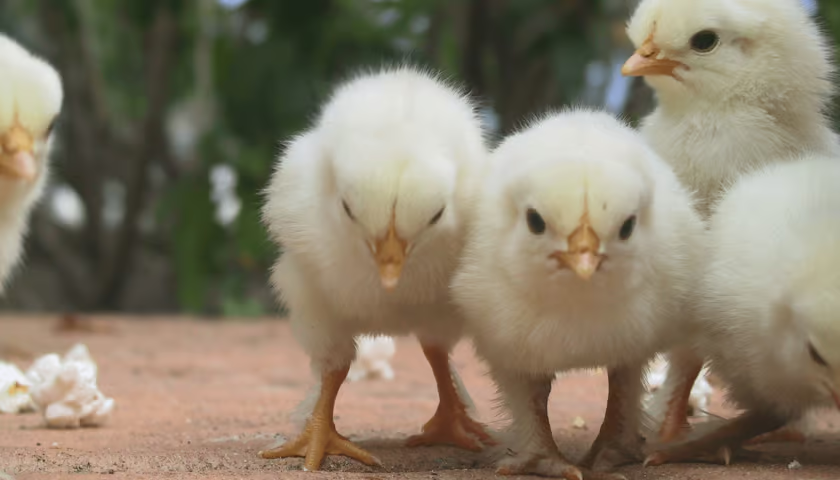
Amino acids emerge as key drivers of appetite control in young chicks
According to the review, short-term refeeding causes rapid increases in several free amino acids in the brain, suggesting they serve as fast-acting satiety signals.
-
Japanese researchers pioneer rapid ASF test, South Korea reports new outbreak
The new Japanese approach instead uses 10 millilitres of oral fluid (instead of blood) per test, far more than the 50–200 microliters used in comparable test.
-
Feed One partners Dutch research hub to advance feed innovation
The Feed Design Lab (FDL) runs a pilot-scale test plant designed for practical application and testing of the latest feed manufacturing technologies.
-
Feed One to build US$91M aquafeed plant in Toyokawa, Japan
The new facility, which is scheduled for completion in April 2028, will double its current annual production capacity to 40,000 tonnes.
-
Skretting becomes Japan’s first ASC-certified feed mill
Gihyeon Park, Skretting Japan’s General Manager, states that obtaining ASC Feed Certification aligns with the company’s purpose of “Feeding the Future” sustainably and responsibly.
-
Asahi Group Foods taps into European yeast market with Leiber acquisition
The company aims to integrate its advanced yeast cultivation technology with Leiber’s expertise in processing yeast extract and yeast cell walls.
-