

De Heus Kenya raw material warehouse nears completion as company targets 3.5% market share
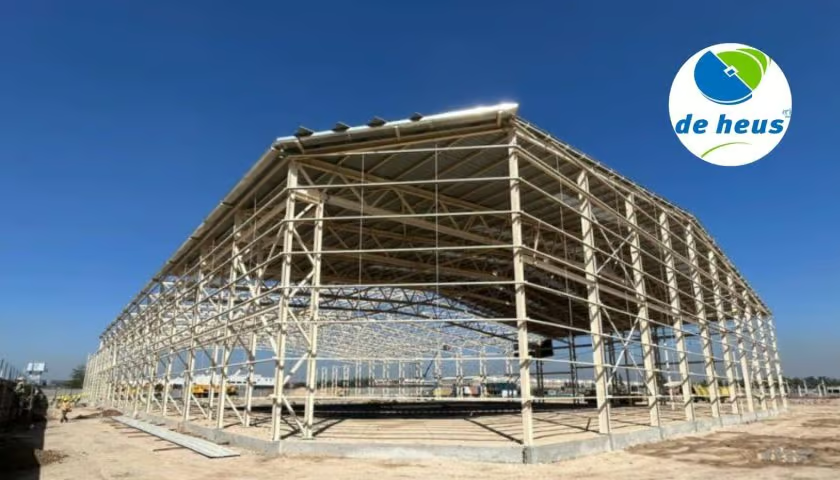
KENYA – De Heus Animal Nutrition Kenya, the local subsidiary of the Dutch feed milling giant, is approaching a significant milestone with the completion of its raw material warehouse.
This facility is part of the company’s broader plan to establish its first dedicated animal feed plant in Kenya, a KES3 billion (US$23 million) investment near Athi River.
The warehouse is expected to be completed within the coming weeks, reinforcing the company’s ability to maintain a reliable supply of products to support Kenyan farmers.
This development is crucial as De Heus aims to secure 3.5% of Kenya’s animal feed market by the end of the year, up from its current 2% share in the poultry, swine, and ruminant segments.
The new state-of-the-art facility, set to be operational by mid-2025, will produce approximately 200,000 metric tons of high-quality animal feed annually, with a focus on the poultry, ruminants, and swine sectors.
“Our commitment is to support the health and performance of your animals, helping you achieve optimal results and success in your farming endeavors,” said Wiehan Visagie, General Manager of De Heus Kenya.

In addition to its 250 direct and 1,000 indirect job opportunities, the new plant will help De Heus expand its reach in Kenya’s growing animal feed market, expected to grow at a compound annual growth rate (CAGR) of 5.8% between 2024 and 2030, according to a report by 6Wresearch.
This growth is driven by a rising demand for livestock products such as milk, meat, and eggs, as well as increasing adoption of high-quality feed by farmers seeking to improve livestock health and productivity.
The company is especially relying on the poultry segment as a key growth area before the factory becomes operational.
“We are seeing a significant rise in the demand for poultry products, particularly meat and eggs. Many blue-collar workers in both peri-urban and rural areas are increasingly engaging in poultry farming as a side business,” explained Sam Ochieng, Chief Financial Officer of De Heus Kenya.
According to data from De Heus Kenya, the average Kenyan consumes about 1.26 kilograms of broiler chicken and 36 eggs (2.6 kilograms) per person annually.
With Kenya’s poultry population estimated between 43.2 million and 49.7 million, the demand for quality broiler and layer feed continues to grow.
De Heus projects that its market share could increase by 15% by 2027, two years after the Athi River plant becomes fully operational.
In the meantime, the company is working with local distributors and focusing on key regions such as Central, Rift Valley, Western, and Coastal Kenya to expand its footprint in the fluctuating feed market.
Sign up to receive our email newsletters with the latest news updates and insights from Africa and the World HERE.

Be the first to leave a comment